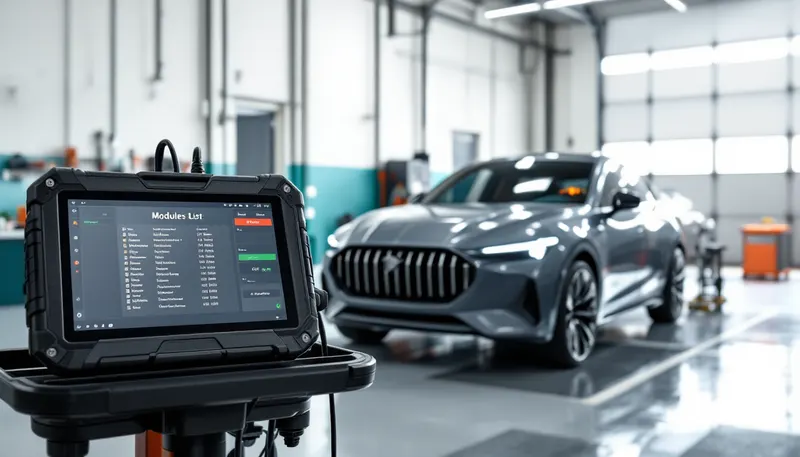
Check Engine Diagnostics
Factory-level scan, cause confirmed, written range
- Price range
- $99–$189
- Typical time
- 1–1.5 hours

$189–$4,500 · 1.5 hours to 4 days
Slipping, shuddering and harsh shifts have causes that range from a $189 fluid service to a $4,500 replacement. The diagnosis tells you which one you have before you spend anything on the fix.
All makes, published price ranges, every repair covered for 2-year/24,000-mile
Symptoms
Problem
Flare between gears, revs rise then catch
Likely cause
Low or burnt fluid, a worn clutch pack, or a solenoid not holding pressure
The fix
Fluid and pressure check; solenoid or valve body if hydraulics fail the test
Problem
Shudder at 30–45 mph on light throttle
Likely cause
Torque converter clutch slipping on degraded fluid, common on GM 8-speeds and some Fords
The fix
Fluid exchange with the updated fluid; converter if the shudder stays
Problem
Thump into drive or reverse after sitting
Likely cause
Low fluid, a worn mount, or pressure bleeding down through a valve body
The fix
Level and mount check first; valve body if the delay is hydraulic
Problem
CVT whines, flares or judders when hot
Likely cause
Degraded CVT fluid, a weak pump, or belt and pulley wear
The fix
Fluid service with the specified fluid; replacement if wear is confirmed
Problem
Stuck in one gear, warning on the dash
Likely cause
Limp mode from a speed sensor, a solenoid circuit, or low fluid after a leak
The fix
Module read, sensor or solenoid repair, leak fixed before refilling
Problem
Fluid on the driveway, red or dark brown
Likely cause
Pan gasket, cooler lines, axle seals or a cracked case
The fix
Leak traced with dye; seals and lines; level set hot afterward
The cheapest transmission repairs are the ones that turn out not to be transmission repairs, so the diagnosis starts broad. The fluid is checked at operating temperature for level, colour and smell: bright red or green and odourless is healthy, dark brown and burnt is not, and a level low by a quart explains a surprising number of slips. The transmission module is read with the brand tool for codes, adaptation values and the temperature history, and the engine module for anything that could make the transmission behave badly, such as a misfire or a throttle fault.
Then a road test with the tool logging: gear commanded against gear achieved, slip across the converter clutch, line pressure where the brand reports it, and the shift that produces the complaint. Some faults need a specific test, a solenoid resistance check, a pressure gauge on a test port, or a stall test, and those are done before the write-up.
The write-up separates the possibilities into fluid, electrical, hydraulic and mechanical, states which one the evidence points to and gives the range for that repair. It also says when a fluid service is being proposed as a repair and when it is being proposed as a first step with the understanding that a worn unit may not respond.
Automatic transmission fluid wears out. It loses its friction modifiers, picks up clutch material and oxidises in the heat that a Dallas summer and a stop-and-go commute put into it. Many of the shudders, flares and lazy shifts the shop sees on cars between 60,000 and 120,000 miles respond to a fluid and filter service at $189–$349, with the pan dropped, the filter replaced and the correct fluid refilled and set at temperature. GM published a specific updated fluid for the torque converter shudder on its 8-speed trucks, and Ford and Honda have similar bulletins; the service follows them.
It is a mask when the clutches are already worn. New fluid can briefly improve a transmission whose friction material is in the pan, then it slips again within weeks. That is why the diagnosis looks at the old fluid and the pan before recommending the service, and why the estimate says plainly whether the service is expected to cure the fault or to buy time.
The old advice about never changing high-mileage fluid comes from flushes done with the wrong fluid on neglected units. A drain, filter and refill with the specified fluid does not cause a failure; it reveals one that was already there.
A CVT, the Nissan and Infiniti units in the Altima, Rogue, Sentra and Pathfinder, the Honda units in the Civic, Accord and CR-V, and the Toyota and Subaru units, uses a steel belt or chain between two pulleys and has no gears to shift. It depends entirely on its fluid for grip, so the fluid service at $189–$299 with the exact manufacturer fluid is the single most effective maintenance item, and the wrong fluid is the fastest way to ruin one. Judder, whine and flare on a hot afternoon are the first signs; a worn belt or a weak pump is a replacement, not a repair.
Dual-clutch units, the Hyundai and Kia DCT and the Volkswagen DSG, are automated manuals with two clutches and a mechatronic control unit. The DSG needs its fluid and filter every 40,000 miles and its mechatronic unit is a known failure point; the dry-clutch Hyundai and Kia DCT shudders at low speed and relies on a clutch relearn with the tool. Neither should be serviced like a conventional automatic.
The modern 8-, 9- and 10-speed automatics in Ford, GM, Ram and many Asian cars shift well when their adaptations are current and poorly when they are not. After a battery change, a software update or a repair, the adaptations are reset and the relearn driven with the tool, which is part of the job rather than an add-on.
Between a fluid service and a full replacement sits the hydraulic and electrical work that fixes most faults on transmissions whose clutches are still healthy. A solenoid pack or a valve body at $600–$1,800 replaces the parts that direct fluid to the clutches; a sticking valve or a solenoid out of range produces harsh shifts, flares and limp mode with codes that point straight at it. On many units the valve body is replaced as an assembly with its solenoids and then programmed or relearned with the brand tool.
A torque converter is replaced when the lock-up clutch shudders after a fluid service has not cured it, or when the stall test shows it slipping. The converter itself is not expensive; the labor to remove the transmission is, which is why a converter job is often weighed against a remanufactured unit on a high-mileage car.
Each of these is quoted only after the test that confirms it, with the range written and the risk stated. The shop tells you when a mid-range repair on a worn transmission is not worth doing, and quotes the replacement instead.
When the clutches, the belt or the hard parts are worn, the choice is between a rebuild of your unit and a remanufactured transmission. A remanufactured unit at $2,800–$4,500 installed comes from a facility that updates the known weak points, tests the unit on a dynamometer and backs it with its own nationwide warranty; the price depends on the transmission type, the fluid volume and whether the cooler, lines and mounts are replaced at the same time, which they usually should be.
A rebuild of your own unit can cost less on simple older transmissions and more on complex new ones, and its quality depends on the builder. The estimate shows both routes where both make sense, with the warranty terms for each, so the comparison is yours. The shop's own 2-year/24,000-mile coverage applies to the installation and to the parts it supplies.
The replacement takes 2–4 days including the fluid cooler flush, the adaptation relearn and a road test over a range of temperatures. On a car worth less than the repair, the shop says so before you commit.
Heat is the enemy. Fluid that runs hot oxidises, and a transmission that idles in July traffic on I-635 or tows a trailer to Lake Ray Hubbard runs hot. Service the fluid at the interval for severe service, which is the honest category for most cars here, and check the cooler and the radiator at the same time because many transmissions cool through the radiator.
Let the car warm up for a minute before pulling out on a cold morning, come to a full stop before shifting between reverse and drive, and treat a shudder or flare as a symptom, not a quirk. On CVTs and dual-clutch units, use only the specified fluid and keep the interval. A $189–$349 service every few years is the cheapest insurance against a $2,800–$4,500 replacement.
Fluids are the manufacturer specification only: Toyota WS, Honda HCF-2 and DW-1, Nissan NS-2 and NS-3, Ford Mercon LV and ULV, GM dexron VI and the Mobil 1 synthetic LV specified for the shudder bulletin, Hyundai and Kia SP-IV and DCT fluid, VW DSG fluid by part number. A universal fluid is not used in a CVT or DSG.
Solenoids, valve bodies and converters are original-equipment or remanufactured by established rebuilders; remanufactured transmissions come with a nationwide warranty of their own on top of the shop's coverage of the installation.
What moves the price: transmission type (conventional, CVT, DCT), fluid volume and cost, whether the pan is sealed or has a filter, access to the valve body, and whether cooler, lines and mounts are replaced with a unit.


Pricing
| Service | Price range | Typical time |
|---|---|---|
| Automatic transmission fluid and filter service, pan dropped, level set hot | $189–$349 | 1.5–2 hours |
| CVT fluid service with the manufacturer's fluid | $189–$299 | 1–1.5 hours |
| Solenoid pack or valve body, programmed or relearned | $600–$1,800 | 3–8 hours |
| Remanufactured transmission installed, cooler flushed, adaptations relearned | $2,800–$4,500 | 2–4 days |
| Diagnosis of a transmission warning or limp mode | $99–$189 |
Dallas independent-shop ranges; the transmission type and the fluid it requires set most of the figure, and the estimate is written after the diagnosis names the cause.
The offer
Risk reversal
Covered for 2 years parts and 2 years labor, up to 24,000 miles, nationwide
No deposit, no card online: you approve the written range before any part is ordered
Published range
$189–$4,500
1.5 hours to 4 days
Brands
Nissan
Altima and Maxima, Sentra and Versa, Rogue and Murano
Honda
Civic, Accord, CR-V and HR-V
Ford
F-150, Super Duty F-250 and F-350, Explorer and Expedition
Chevrolet
Silverado and Sierra, Tahoe, Suburban and Yukon, Equinox, Terrain and Traverse
Hyundai
Elantra and Accent, Sonata, Tucson and Santa Fe
Volkswagen
Jetta and Passat, Tiguan and Atlas, Golf, GTI and Golf R
Questions
Not necessarily. Degraded fluid produces exactly that symptom, and a fluid service with Nissan NS-3 at $189–$299 cures a good share of them when done before the belt is damaged. The diagnosis reads the CVT module for the temperature counter and judder codes and checks the fluid first; if the unit is worn, you are told so instead of sold a service that will not hold.
A remanufactured unit installed runs $2,800–$4,500 depending on the transmission type, the fluid volume and whether the cooler, lines and mounts are done with it. The estimate compares that with a rebuild where a rebuild makes sense, and states the warranty on each.
A drain, filter and refill with the specified fluid is not. The stories come from machine flushes with the wrong fluid on units that were already failing. The shop inspects the old fluid and the pan before recommending a service and tells you if the transmission is too far gone for it to help.
Often. A misfire, a throttle body fault, a bad crank or speed sensor or a low battery voltage can produce harsh shifts, limp mode and a transmission code. The diagnosis reads both modules and the road test separates them, which is why it comes before any transmission price.
Yes, with the VW fluid and filter at the 40,000-mile interval and with the adaptation procedure run in the tool afterward. Mechatronic faults are diagnosed with the same tool and quoted as a valve body-class repair at $600–$1,800 where the unit can be repaired.
A fluid service is 1–2 hours and usually same-day. A valve body or solenoid repair is 3–8 hours and may need a day for the part. A remanufactured unit takes 2–4 days including the relearn and road tests. The estimate states the time before you approve it.
Related
Factory-level scan, cause confirmed, written range
Overheating diagnosed, radiator, pump, thermostat

Scan, road test, lift, written report with photos
Book Transmission Service and Repair in Dallas
Transmission service and repair in Dallas for automatics, CVTs and dual-clutch units of any make: fluid and filter service, solenoid and valve body repair, and remanufactured replacement, each diagnosed first and quoted as a written range.