Suspension
Suspension Noise Guide for Dallas: What Each Sound Means
· 17 min read · Dallas Mechanic
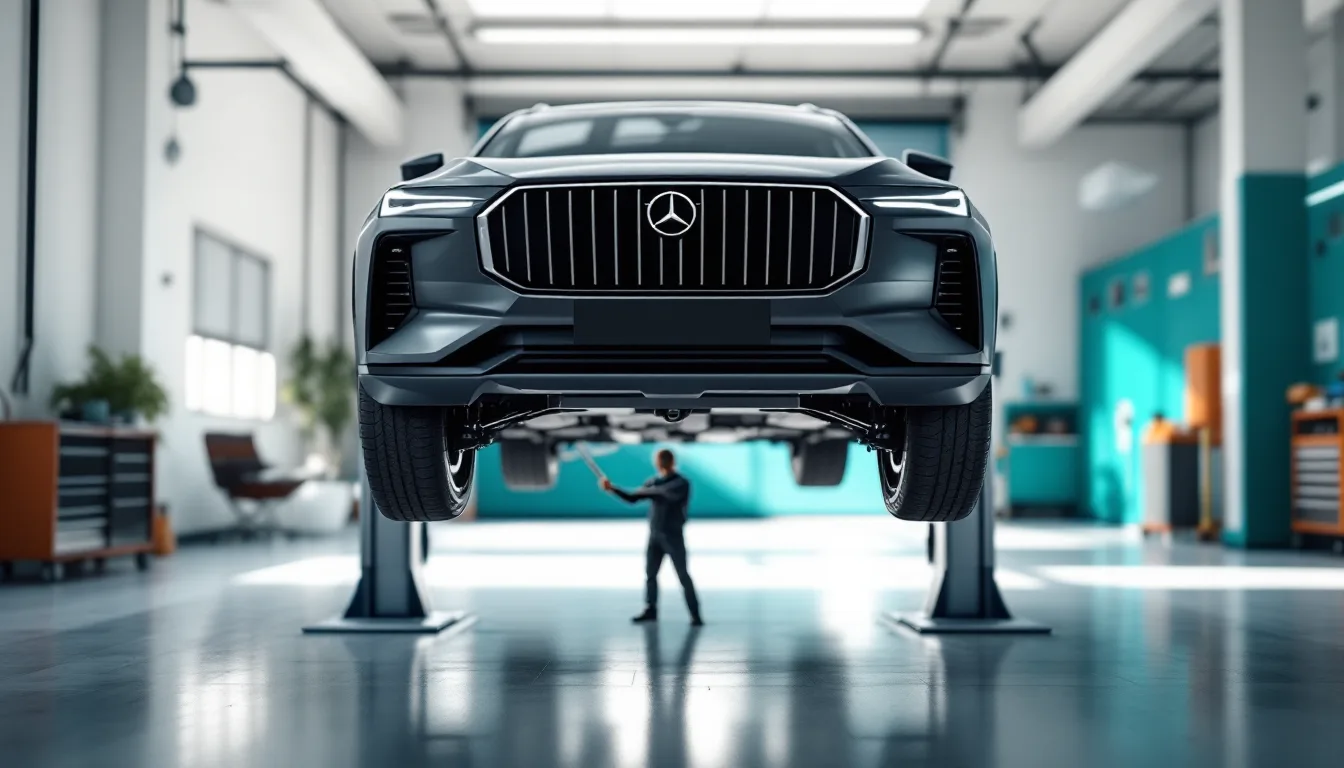
What does suspension repair cost in Dallas and what does each noise usually mean?
Suspension noises are the complaint we hear most often after brakes, and most of them trace to a short list of parts. At an independent shop in Dallas, sway bar end links run $99–$249 a pair, a control arm with its ball joint runs $250–$650 each, a wheel bearing or hub runs $280–$650 each, a pair of struts or shocks runs $600–$1,400, and a four-wheel alignment runs $99–$149. A clunk over bumps is usually end links or bushings, a knock on turns is usually a ball joint or a CV joint, a hum that rises with speed is usually a wheel bearing, a creak at low speed is usually a bushing or strut mount, and a rattle is often a heat shield rather than the suspension at all. The road test and the pry-bar check on the lift decide which, and you get a written range for the specific part before it is ordered. The parts and labor are covered by 2 years parts and 2 years labor, up to 24,000 miles, nationwide. If your car has started making a noise it did not make last month, email service@dallasmechanic.net with the year, model, mileage and a description of when the sound happens.
Why does Dallas wear out suspension parts so quickly?
Some of the suspension damage we see is simply age. The Bureau of Transportation Statistics tracks what it calls the "Average Age of Automobiles and Trucks in Operation in the United States", and that figure has climbed past twelve years, according to the BTS data page. A twelve-year-old car has rubber bushings that have been baking in Texas heat for twelve summers, and rubber that has hardened and cracked is the starting point for most clunks and creaks.
The rest is the roads. Dallas highways are built largely of concrete slabs with expansion joints, and the stretches of I-635 between US-75 and I-30, Loop 12 through east Dallas and parts of I-30 toward Mesquite deliver a joint strike to each wheel every few yards at highway speed. That is thousands of small impacts per trip, and worn end links announce every one of them. Spring storm season adds potholes. The National Weather Service office that covers Dallas and Fort Worth tracks the severe weather that hits the region each spring, and after a week of heavy rain the pavement on the surface streets breaks up and the pothole calls begin. Apartment complexes in Garland, Richardson and along Northwest Highway use speed bumps that drivers take at twice the posted speed. Pickup owners haul material, tow boats to Lake Ray Hubbard and run heavy toolboxes in the bed every day, which loads the rear springs and shocks beyond what the same truck would see as a commuter.
One more change matters. Texas ended its annual vehicle safety inspection on January 1, 2025, as described on the Texas Department of Public Safety inspection page, and only the emissions test remains for Dallas-area counties. That means nobody is required to look at your ball joints, tie rods and steering play once a year anymore. The noise is now the only inspection many vehicles get, which is why it pays to understand what each sound is telling you.
What is the clunk over bumps?
A clunk over bumps is a single, hollow knock from one corner of the car when a wheel drops into a pothole, crosses an expansion joint or rolls over a speed bump. It is the most common suspension complaint in the shop.
The usual cause is a sway bar end link. The sway bar, also called the anti-roll bar, is a steel bar that runs across the car and connects to each side of the suspension through a short link with a small ball joint at each end. When those joints wear, the link rattles in its sockets on every bump and makes a knock that is easy to hear with the window down. The link itself is inexpensive, and a pair runs $99–$249 installed. On many Hondas, Toyotas and Hyundais the link is a ten-minute job per side; on some trucks and Volkswagens the lower nut corrodes and has to be cut, which pushes the time up.
The second cause is a control arm bushing. The control arm is the hinge that holds the wheel to the body, and it pivots on rubber bushings. When the rubber tears or the bushing's inner sleeve separates from the outer shell, the arm moves fore and aft on braking and bumps and produces a deeper, heavier clunk than an end link. On most current vehicles the bushing is not sold separately, so the repair is a control arm with its ball joint at $250–$650 each. Hydraulic-filled bushings on some sedans and crossovers leak their fluid and clunk the same way.
Strut mounts and sway bar bushings are the other suspects. A worn upper strut mount lets the strut shaft knock against the body over bumps, and a loose or dry sway bar bushing at the frame makes a knock that sounds similar to an end link. The road test narrows the list, and the pry-bar check on the lift finishes it.
What is the knock when you turn?
A knock that happens when you turn the wheel, especially at low speed in a parking lot or on a tight ramp, comes from a different group of parts.
A ball joint is the most important one. The ball joint is the pivot that lets the steering knuckle turn and move up and down while holding the wheel to the control arm. When it wears, it knocks on turns and over bumps, and in its final stage it separates, which drops the corner of the car onto the tire and takes steering away. A worn ball joint is a stop-driving item. On most modern vehicles the lower ball joint is pressed or riveted into the control arm, so the repair is the control arm with the joint at $250–$650 each. On many pickups and some older trucks the joint is a separate press-in part, and the same range applies to the labor-heavy job of replacing it.
A CV joint makes a different knock. A constant-velocity joint is at each end of the drive axle on front-wheel-drive and all-wheel-drive vehicles, and when the outer joint wears it clicks or knocks in a rhythm that matches wheel speed while you turn under power. A torn boot that let the grease out is the usual cause, and the repair is a replacement axle shaft. A CV joint that clicks is not an emergency in the way a ball joint is, but it will eventually fail and leave the car unable to move.
Tie rod ends also knock on turns, and they show up on the pry-bar check as play at the end of the steering linkage. A worn tie rod is a safety item for the same reason as a ball joint: if it separates, that wheel no longer steers. The tie rod end is a relatively inexpensive part and is replaced with an alignment at $99–$149, since it sets the toe.
What is the hum or growl that changes with speed?
A hum, growl or low roar that starts at a certain speed, grows louder as you go faster and changes pitch when you steer gently left or right at highway speed is a wheel bearing. The bearing is the set of rolling elements that lets the wheel spin on the hub, and when a seal fails or the races pit, the rolling elements rumble. Steering loads one side of the car and unloads the other, which is why the noise changes with a lane change: it gets louder when the worn bearing carries more weight.
A bearing or hub assembly runs $280–$650 each. The range is wide because the two bearing designs are very different jobs. A hub unit, used on most trucks, crossovers and many newer sedans, bolts to the knuckle and is replaced in about an hour. A pressed bearing, common on compact and mid-size cars from Honda, Hyundai and others, requires the steering knuckle to come off and the bearing to be pressed out and in with a hydraulic press, which doubles the time.
Two things get mistaken for a bearing. The first is tire noise. A tire that has worn unevenly from a bad alignment or a worn strut develops a choppy, cupped tread that hums at speed, and the sound is similar enough that the two are confused all the time. On the lift, a bearing has play or roughness when the wheel is spun by hand, and a cupped tire does not. The NHTSA tire safety page describes the inflation and rotation habits that prevent irregular wear in the first place, and a tire we find cupped is a reason to check the parts that cupped it. The second is a differential or transmission bearing on rear-wheel-drive trucks and all-wheel-drive crossovers, which hums with speed but does not change with steering. A road test that includes gentle swerves at highway speed separates all three.
A bearing that has started to growl should be replaced before it gets loud. A bearing that is far gone overheats, loosens and in rare cases lets the wheel wobble on the hub, which damages the knuckle and the ABS sensor and turns a $280–$650 job into a larger one.
What is the creak at low speed?
A creak or groan at parking-lot speed, when the car rocks over a driveway apron or a speed bump, is the sound of rubber or a dry joint under load. The classic sources are control arm bushings, strut mounts and the rubber bushings on the sway bar.
Rubber bushings creak when the rubber has hardened with age and heat and no longer flexes quietly. Dallas summers accelerate this, and the sound is often worst on the first drive of a cold morning. A control arm bushing that creaks is usually one that will clunk soon, and the repair is the same control arm at $250–$650 each. An upper strut mount creaks or groans when the bearing inside it binds; it is replaced with the strut when the struts are done, and on a car with good struts it can be replaced alone, though the labor overlaps heavily with a strut job.
Dry sway bar bushings at the frame creak as the bar twists through them, and the fix is a pair of bushings and a cleaning of the bar, a small line item. Leaf spring bushings and shackles on pickups creak over driveways when the rubber or the plastic liners wear out. Ball joints with a torn boot and no grease left can creak before they knock.
A creak is rarely a safety issue by itself, but it is the earliest warning the suspension gives, and catching a bushing at the creak stage is cheaper than catching the control arm at the clunk stage after it has worn a tire.
What is the rattle, and is it even the suspension?
A rattle, a light metallic buzzing or tinny vibration that comes and goes with road texture and engine speed, is the noise most often blamed on the suspension that turns out not to be. The leading cause is a heat shield.
Exhaust heat shields are thin stamped metal panels bolted or spot-welded around the catalytic converter, the muffler and the exhaust pipes. The fasteners rust through, the shield hangs loose and it rattles against the pipe at certain engine speeds or over rough pavement. It is harmless, it is annoying, and it is a small repair. We hear this one on every make, and on older Nissans and Fords in particular.
A strut rattle is different. A worn strut with a loose internal rod, a failed bump stop or a strut mount with a broken bearing produces a rattle that is heavier and more localized to one corner, and it is accompanied by other symptoms: a bounce after bumps, nose-dive under braking or uneven tire wear. A rattle that is only a rattle, with no change in ride or handling, is almost always a shield, a loose brake dust cover or a bracket.
The pry-bar check and a quick tap along the exhaust on the lift tell the two apart in minutes, and the written range reflects which it is. A rattle alone is not a reason to approve a strut job.
What do bounce, nose-dive and wander tell you?
Not every suspension complaint is a noise. Three handling symptoms matter as much as any sound.
Bounce is the simplest. A healthy strut or shock stops the body from oscillating after a bump in about one cycle. When the car floats, bobs or keeps rocking after a dip, the dampers have lost their ability to control the spring. The same wear shows up as nose-dive, where the front of the car drops sharply under braking and the rear lifts, lengthening stopping distances. A pair of struts or shocks runs $600–$1,400 installed, front or rear, and the range covers the difference between a bare shock on a truck and a complete strut assembly with spring and mount on a crossover. Struts are replaced in pairs because mismatched damping side to side makes the car unstable in an emergency maneuver. A leaking strut, oil wet down the body of the strut, is a definite replacement; a dry strut is judged on the bounce and the tire wear. An alignment at $99–$149 follows a front strut job because the strut sets the camber angle on most designs.
Steering wander, where the car drifts and needs constant small corrections on a straight road, points to alignment, worn tie rods or a worn steering rack. Uneven tire wear, feathering across the tread or wear on one edge, is the same story written on the tire. A four-wheel alignment at $99–$149 corrects the angles, but an alignment done on worn parts does not hold, which is why the pry-bar check comes first. The fueleconomy.gov maintenance page notes that keeping a vehicle properly maintained and its tires in good condition protects fuel economy, and a car that scrubs its tires sideways down the road is wasting both rubber and fuel.
A corner that sits visibly lower than the others is a broken spring or a collapsed air spring on vehicles that have them, and it is inspected before the car is driven further.
Here is how the main suspension lines break out at a Dallas independent shop.
| Line item | Typical range | Time | What moves the price |
|---|---|---|---|
| Sway bar end links, pair | $99–$249 | 1 hour | Corroded fasteners that must be cut, truck or lifted-vehicle links |
| Control arm with ball joint, each | $250–$650 | 1–2 hours | Aluminum versus stamped steel arm, hydraulic bushing, alignment afterward |
| Wheel bearing or hub, each | $280–$650 | 1–2 hours | Bolt-on hub versus pressed bearing, ABS sensor integrated, 4WD or heavy-duty hub |
| Struts or shocks, pair, front or rear | $600–$1,400 | 2–4 hours | Complete strut assembly versus bare shock, electronic dampers, mounts and bump stops |
| Four-wheel alignment | $99–$149 | about 1 hour | Seized adjusters, camber bolts or shims needed, ride-height-sensitive systems |
Each line is quoted as a range with the reason your vehicle sits where it does, and the parts are ordered only after you approve the written figure.
How do the road test and the pry-bar check separate the causes?
Guessing from a noise description alone is how parts get replaced that did not need replacing. Two steps keep the diagnosis honest, and we do both before a range is written.
The road test comes first. The technician drives the car over the kind of surface that produces the noise, with the window down and the radio off. Expansion joints on a frontage road, a speed bump in a parking lot, a slow full-lock turn in each direction and a gentle swerve at highway speed each provoke a different part. Where in the car the noise is, whether it changes with steering, braking, speed or engine speed, and whether it happens once per bump or in a rhythm with the wheel all go into the notes. A hum that changes with steering is logged as a likely bearing; a knock on full-lock turns as a likely ball joint or CV joint; a single knock per joint strike as a likely end link.
The pry-bar check comes next. With the car on the lift and the wheels hanging, the technician uses a long pry bar to load each joint and bushing by hand while watching for movement. An end link that moves at its sockets, a ball joint that lifts in its housing, a control arm bushing whose inner sleeve shifts inside the shell, a tie rod with lateral play, a bearing with rock when the wheel is grabbed at twelve and six, a strut mount that lets the shaft clock in the tower: each is a specific, visible finding. We photograph what we find and attach it to the estimate.
For vehicles with electronically controlled dampers or air suspension, the factory-level scan tool reads the suspension control module for stored faults and height sensor values as part of the same visit, through the same equipment used for check engine diagnostics. A warning on the dash for adaptive suspension is a fault in that module, not a bushing.
The result of the two steps is a range for the specific part, not for "suspension work" in general. If the road test suggests a bearing and the pry-bar check finds none, we say so and keep looking rather than selling the bearing.
What moves the price, and what does the warranty say about independent shops?
Within each range, the same handful of things move the figure. Design is the big one: a bolt-on hub is cheaper in labor than a pressed bearing, a bare shock is cheaper than a complete strut assembly, and a stamped steel control arm is cheaper than a forged aluminum one. Corrosion is next: a fastener that must be cut or drilled, or a bearing seized into its knuckle, adds time. Vehicle class matters, as it does for brakes: a half-ton truck's hub or a heavy-duty truck's ball joint costs more than the same part on a Corolla. Electronic dampers and air springs on higher trims add parts cost and a calibration step. Whether an alignment is needed afterward depends on which part moved the wheel. Labor rates reflect the market for skilled people; the Bureau of Labor Statistics put the national median pay for automotive technicians and mechanics at roughly $23.88 an hour in 2024, and the technician who finds the right bushing on the first pass is worth it.
If your vehicle is still under the factory warranty, you can have this work done at an independent shop. The Federal Trade Commission's guidance on auto warranties explains that under the Magnuson-Moss Warranty Act a manufacturer or dealer cannot void your warranty simply because an independent shop performed maintenance or repairs. Keep the invoice, which lists the part, the measurement and the reason. Suspension parts occasionally appear in safety recalls, and we check the VIN against the NHTSA recall database before writing a range, because a recalled control arm or strut is repaired by the dealer at no cost to you. Dealer quotes for the non-recall work are commonly higher than the ranges above. The Car Care Council's consumer resources at carcare.org also recommend having the suspension and steering inspected on a regular schedule rather than waiting for a failure, which we second.
When should you stop driving?
Most suspension noises can wait for an appointment within a week or two. A few cannot, and the difference is whether the part controls where the wheel points or whether it stays attached.
Stop driving and have the vehicle brought in when a ball joint or tie rod shows play on the lift or when the steering suddenly feels loose, when a wheel bearing has gone from a hum to a loud grinding or the wheel is hot to the touch after a short drive, when a corner of the car is sitting low or the car pulls hard to one side without warning, or when a strut or spring has visibly broken. Each of these is a case where the next pothole can separate a part and take steering or a wheel away from you.
Schedule promptly, within days, for a knock that changes with steering, a growl that is getting louder each week, nose-dive under braking that is getting worse, or tire wear you can see from across the parking lot. Schedule at your convenience for an end-link clunk, a bushing creak or a heat shield rattle.
Whatever the sound, the path is the same: a road test, the pry-bar check, photos of what we find and a written range for that part before anything is ordered, all backed by 2-year/24,000-mile. The suspension work itself is described on the suspension service page, and because a shake or pull under braking is sometimes a brake problem and sometimes a suspension problem, the brakes page covers the overlap from the other side. We serve every make within 30 of east Dallas, including drivers from Mesquite, Richardson and Balch Springs, on the roads that produce these noises in the first place. Describe the sound, say when it happens, and we will tell you what it most likely is and what the range looks like.
Where do these figures come from?
- BTS figures on the average age of vehicles in operation
- NWS Fort Worth, severe weather and climate for the Dallas area
- Texas DPS vehicle inspection program
- NHTSA tire safety, inflation and wear
- fueleconomy.gov on vehicle maintenance and efficiency
- BLS Occupational Outlook Handbook, automotive technicians
- FTC on auto warranties and independent repair
- NHTSA recalls by VIN
- Car Care Council consumer resources