Brakes
Brake Pad and Rotor Cost by Vehicle Class in Dallas
· 17 min read · Dallas Mechanic
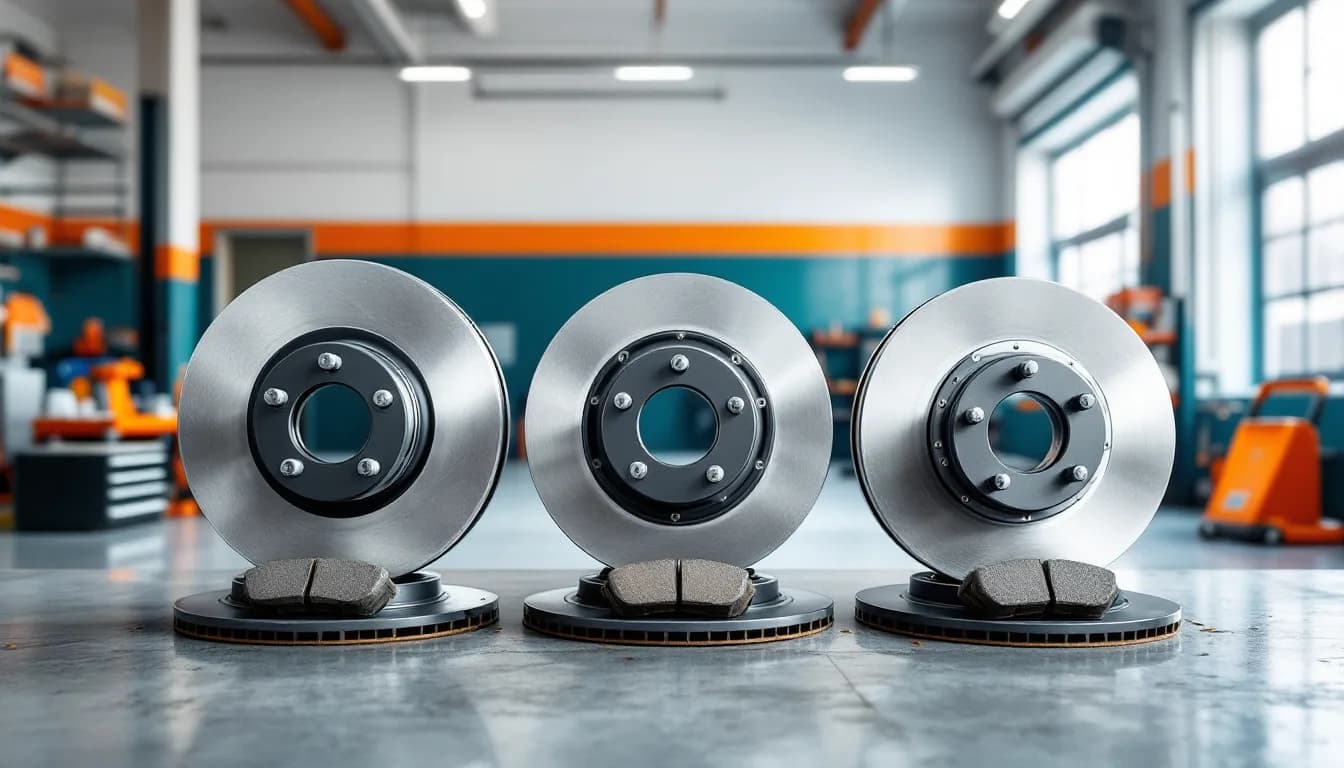
What do brake pads and rotors cost in Dallas and what do you get?
Brake work at an independent shop in Dallas falls into two main lines. Pads and rotors on one axle typically run $249–$699, and a pads-only job on an axle whose rotors still measure within specification runs $149–$329. Where your car lands inside those ranges depends mostly on its class: a compact sedan sits near the bottom, a crossover in the middle, and a half-ton or heavy-duty pickup near the top. Calipers at $189–$449 each and a brake fluid exchange at $99–$149 are separate lines that are only added when the inspection shows they are needed. Every job starts with the pads and rotors measured, the hardware inspected and the fluid tested, and the result is a written range you approve before any part is ordered. The repair is backed by 2 years parts and 2 years labor, up to 24,000 miles, nationwide. If you hear a squeal, a grind or feel a shake when you stop, email service@dallasmechanic.net with the year, model and mileage and we will tell you which range applies.
Why does the vehicle class decide the price more than the brand?
Owners often assume the brand sets the brake price, so a Toyota costs one thing and a Ford another. In practice the size and weight of the vehicle matter far more than the badge. A brake rotor is sized to absorb the energy of the vehicle it stops, so a 3,000-pound Corolla gets a small, light rotor and a 5,500-pound F-150 gets a large, heavy one, and the parts prices follow that scale. The same logic applies to the pads, the caliper piston count and the brake hardware. A Toyota Camry and a Honda Accord cost about the same to brake because they weigh about the same, while a Tundra and a Silverado cost about the same as each other for the same reason.
Dallas adds its own load to the equation. The average vehicle on American roads is now more than 12 years old, according to the Bureau of Transportation Statistics, and an older vehicle in this climate is more likely to carry seized slide pins, corroded hardware and a rotor that has been cut once already. Heat is the other factor. Stop-and-go traffic on I-635, US-75 and I-30 in July works the brakes hard, and the National Weather Service office in Fort Worth, which covers Dallas weather, records summers where triple-digit afternoons are routine. Hot brakes wear pads faster and cook the fluid, which is why the ranges below carry a column for what moves them.
Here is how the main brake lines break out by vehicle class at a Dallas independent shop.
| Vehicle class and line | Typical range | Time | What moves the price |
|---|---|---|---|
| Compact sedan, pads and rotors per axle (Corolla, Civic, Sentra, Elantra, Forte) | $249–$699, usually the lower third | 1.5–3 hours | Rotor condition, seized hardware, pad compound |
| Mid-size sedan, pads and rotors per axle (Camry, Accord, Altima, Sonata, Fusion) | $249–$699, lower to middle | 1.5–3 hours | Larger rotors on V6 or sport trims, electronic parking brake on newer models |
| Crossover or SUV, pads and rotors per axle (RAV4, CR-V, Rogue, Explorer, Tucson) | $249–$699, middle | 1.5–3 hours | Vehicle weight, towing package rotors, rear parking brake type |
| Half-ton pickup, pads and rotors per axle (F-150, Silverado, Sierra, Tundra, Ram 1500) | $249–$699, upper third | 2–3 hours | Heavy rotors, drum-in-hat parking brake service, towing use |
| Heavy-duty truck, pads and rotors per axle (F-250, Silverado 2500, Ram 2500) | $249–$699, top of range | 2–3 hours | Very large rotors, dual-piston calipers, hub-style rotors on older models |
| European compact, pads and rotors per axle (Jetta, Tiguan, Golf) | $249–$699, middle to upper | 2–3 hours | Pad wear sensor, electronic parking brake service mode, rotor set screws |
| Hybrid, rear pads and rotors (Prius, Camry Hybrid, RAV4 Hybrid, Escape Hybrid) | $249–$699, middle | 1.5–3 hours | Rust-pitted rotors, seized pads, coated rotor upgrade |
| Pads only, any class, per axle (rotors measured within spec) | $149–$329 | 1–1.5 hours | Pad compound, hardware kit, sensor on European models |
| Brake caliper, each | $189–$449 | 1–2 hours | Piston count, bracket included or not, hose replaced at the same time |
| Brake fluid exchange | $99–$149 | about 1 hour | Fluid type, ABS bleed procedure, fluid condition |
Every figure in that table is a range, and the written estimate you receive names the line, the range and the reason your vehicle sits where it does inside it.
How does each vehicle class actually differ on the lift?
Compact and mid-size sedans
A Corolla, Civic, Sentra or Elantra is the simplest brake job in the shop. Single-piston floating calipers, light vented rotors in front and small solid rotors in back, and a parking brake that is either a cable to the rear calipers or a small drum inside the rear rotor hat. Parts are plentiful and inexpensive, and the work usually runs toward the bottom of the per-axle range. Mid-size sedans such as the Camry, Accord, Altima and Sonata move up a step. The rotors are larger, V6 and sport trims often carry bigger front brakes, and models from roughly 2018 onward may have an electronic parking brake that must be put into service mode with a scan tool before the rear pads can be pressed back. That adds a little time rather than a lot of cost, but it is why the rear axle on a newer sedan can cost more than the front.
Crossovers and SUVs
A RAV4, CR-V, Rogue, Tucson or Explorer weighs more than its sedan sibling and often carries a towing package, so the rotors and pads are a size up. Rear brakes on crossovers take more abuse than on sedans because the weight distribution is more even and the rear axle does more of the stopping. Rear pads that are worn to the backing plate while the fronts still have life are a common finding on these vehicles. Crossovers sit squarely in the middle of the range.
Half-ton pickups
The F-150, Silverado, Sierra, Tundra and Ram 1500 are where the parts bill climbs. A half-ton rotor is heavy enough that handling it is a two-hand job, the pads are large, and the calipers on many of these trucks use two pistons per side. Rear brakes on most half-tons use a drum-in-hat parking brake, a small drum brake inside the rear rotor that needs to be cleaned, inspected and adjusted during a rear brake job, and the parking brake shoes are an occasional extra line. Trucks that tow boats to Lake Ray Hubbard or haul material for a living wear through pads faster and cook rotors harder. Our Ford and Chevrolet pages cover the specific brake notes for the F-150 and Silverado, and the Toyota page covers the Tundra and Tacoma.
Heavy-duty trucks
An F-250, Silverado 2500 or Ram 2500 sits at the top of the range. The rotors are the largest in the shop, the calipers are big twin-piston units, and on older heavy-duty trucks the front rotors are integral with the wheel hub, which means the wheel bearings come out, get cleaned, repacked and re-adjusted when the rotor is replaced. That is a different job from a bolt-on rotor and it takes longer. A heavy-duty truck that spends its week towing a trailer on I-20 is also the most likely vehicle in the shop to need calipers or a fluid exchange at the same visit.
European compacts
A Jetta, Golf or Tiguan from Volkswagen is built a little differently from a Japanese or domestic compact. Most carry an electronic pad wear sensor on at least one front wheel, a small loop of wire embedded in the pad that breaks when the pad wears down and lights a warning on the dash. The sensor is replaced with the pads, which adds a modest parts cost. Newer Tiguans and Jettas also use an electronic parking brake on the rear axle that must be put into service mode with a capable scan tool, and the rotors are retained by a set screw that occasionally has to be drilled out when it seizes. The factory-level diagnostic access we keep for every brand handles the parking brake and resets the wear warning after the job, and these details are why a VW compact lands a step above a Corolla.
Hybrids
A Prius, Camry Hybrid, RAV4 Hybrid, Escape Hybrid or Insight has a brake problem that has nothing to do with wear. Regenerative braking uses the electric motor to slow the car and recover energy, so the friction brakes are used far less than on a conventional vehicle. The pads last a long time, often well past 100,000 miles. The rear rotors, meanwhile, sit idle, and in Dallas humidity the surface rust that a normal car scrubs off on every stop stays on the hybrid rotor, pits it and seizes the pads in the bracket. The typical finding is a hybrid with 60 percent of its rear pad material left and rotors that are too pitted to be safe, with the pads locked in place. The repair is rotors, pads, cleaned and lubricated hardware and, where the owner wants it, coated rotors that resist rust better. The fuel economy page at fueleconomy.gov explains how maintaining a vehicle protects its efficiency, and on a hybrid that includes keeping the rear brakes free so they do not drag.
Why are rotors replaced rather than machined now?
Twenty years ago a brake job meant pads and a trip to the brake lathe, which cut a thin layer from each rotor face to restore a flat, smooth surface. Shops still own lathes, but machining has become the exception for three reasons.
The first is the rotor itself. Manufacturers cast modern rotors as thin as they safely can to save weight and cost, and every rotor carries a minimum thickness stamped on the casting. A lathe pass removes metal, and on many current rotors a single cut leaves the rotor at or near that minimum, with less mass to absorb heat and a shorter life before it must be discarded. A rotor near its minimum thickness also warps more easily, which brings the pulsation back sooner.
The second is cost. The labor to set up and cut two rotors is close to, and sometimes more than, the price of two new rotors for a compact or mid-size car. Paying for machining to keep a part that is already most of the way through its life is a poor trade for the owner.
The third is what pulsation actually is. The shaking you feel through the pedal is rarely a warped rotor in the literal sense. It is usually disc thickness variation, which starts when pad material transfers unevenly onto the rotor face and then wears the rotor unevenly over thousands of stops. Cutting the rotor removes the variation for a while, but it also removes the metal that resists it coming back. New rotors, bedded properly with the right pads, last longer than a cut rotor on the same car.
That said, pads-only is still a legitimate and common job. When the rotors measure well above the minimum, the surface is smooth and there is no pulsation, we measure them, record the figures on the invoice and fit pads and hardware for $149–$329. The measurements are the point: the decision to replace or keep a rotor should rest on a micrometer reading, not on a glance.
Ceramic or semi-metallic pads: which should you choose?
The two common pad compounds behave differently, and the right one depends on the vehicle and how it is driven.
Ceramic pads use ceramic fibers and fillers bonded with a small amount of metal. They are quiet, produce a light dust that does not stain wheels, and give consistent pedal feel in everyday driving. Their drawback is heat capacity: under repeated hard stops, such as towing down a grade or aggressive driving, they can fade sooner than a metallic compound. For the commuter in a Civic, Camry or CR-V making the daily run on US-75, ceramic is almost always the right choice.
Semi-metallic pads use steel wool, iron and copper-free metal fibers in the friction material. They bite harder when cold, resist fade under heavy use and carry heat away from the rotor well. They also make more dust, can squeal when the weather is cold or damp, and wear rotors a little faster. For a half-ton or heavy-duty pickup that tows, a crossover that spends weekends loaded with a family and cargo, or a driver who simply uses the brakes hard, semi-metallic is often the better fit.
A note on cost: pad compound moves the price by a modest amount within the range, not by hundreds of dollars. The bigger factor is quality within each type. A premium ceramic pad with a proper shim, chamfer and slot costs more than a bargain pad of either compound and is worth it for noise and life. The nonprofit Car Care Council at carcare.org publishes general maintenance guidance for owners, and its position that brakes should be inspected on a schedule rather than when they fail is one we agree with.
When do you need calipers, and what do they cost?
A brake caliper is the hydraulic clamp that squeezes the pads against the rotor. On most vehicles a caliper lasts well beyond one or two sets of pads, and a shop that quotes calipers with every brake job should be asked why. There are, however, clear cases where a caliper at $189–$449 each is the right call.
A seized piston is the first. When the piston corrodes in its bore and stops retracting, the pad on that side drags, overheats and wears to nothing while the opposite pad looks new. The symptom is a pull to one side, a hot wheel after a drive and sometimes a burning smell. A torn piston boot that has let grit into the bore leads to the same place. A caliper that leaks fluid at the piston or the bleeder is a safety item and is replaced without debate.
Seized slide pins are the second case, and it is more common in Dallas than seized pistons. The pins let a floating caliper center itself over the rotor, and when the grease dries out and the pin corrodes, the caliper cocks and wears the pads at an angle. Most of the time the pins can be cleaned, lubricated and reused as part of the brake job, but when a pin is rusted into the bracket or its bore is pitted, the bracket or the caliper is replaced.
Calipers are also replaced when the parking brake mechanism inside a rear caliper fails, when an electronic parking brake motor on the caliper stops responding, and on older high-mileage vehicles where a fluid leak elsewhere has let the system run dry. A brake hose is sometimes replaced with the caliper when its inner liner has collapsed and acts as a one-way valve, which produces the same dragging symptom as a seized piston. The written range identifies which of these applies and shows the measurement or the photo that supports it.
Why does brake fluid matter so much in Dallas heat?
Brake fluid is the one part of the system most owners never think about, and in this climate it deserves attention. DOT 3 and DOT 4 fluids are hygroscopic, which means they absorb moisture from the air through the hoses, the reservoir cap and the seals. Water in the fluid does two things. It lowers the boiling point, and it corrodes the metal parts the fluid touches.
The boiling point is the safety issue. Fresh DOT 4 fluid boils well above 400 degrees Fahrenheit, but fluid with a few percent water by volume boils far lower. Hard stops in dense traffic on a 105-degree afternoon can push caliper temperatures high enough that the water in old fluid turns to vapor. Vapor compresses, fluid does not, and the result is a pedal that sinks toward the floor just when you need it most. A fluid exchange at $99–$149 flushes the old fluid from the reservoir through each caliper, runs the ABS bleed routine on vehicles that require it, and restores the boiling point.
Corrosion is the long-term cost. Moisture in the fluid attacks the ABS hydraulic unit, the caliper bores and the steel lines from the inside. An ABS modulator is one of the most expensive parts on an ordinary car, and most of the ones we see fail have been running on dark, moisture-laden fluid for years. We test the fluid with a moisture meter or test strips during every brake inspection and note the result on the estimate. Most manufacturers suggest a fluid exchange every two to three years regardless of mileage; the owner resources from Ford and Toyota list the interval for each model and year, and in Dallas we lean toward the shorter end.
What do the brake symptoms tell you before you call?
Each brake noise or feel points to a different part of the system, and knowing the pattern helps you describe the problem and lets us quote a tighter range.
A high-pitched squeal when you brake lightly, and sometimes when you are not braking at all, is most often the wear indicator, a small steel tab on the pad that contacts the rotor when the material is nearly gone. It is a built-in warning rather than damage, and a pads-only job is still possible if the rotors measure well. A squeal that comes and goes with cold or damp weather on pads that measure fine is usually glazed pad material or a missing shim and is treated differently.
A grinding or scraping noise means the pad material is gone and the steel backing plate is cutting into the rotor. At this point the rotor is almost always ruined, so the job becomes pads and rotors rather than pads only, and continuing to drive risks damaging the caliper too. Grinding is the symptom that should bring the car in that week.
Pulsation or shaking through the pedal or steering wheel under braking is disc thickness variation as described above. It is uncomfortable rather than immediately dangerous, but it gets worse and it accelerates pad wear. The fix is rotors and pads on the affected axle.
A pull to one side under braking points to a seized caliper piston, a seized slide pin or a collapsed brake hose on the opposite side from the pull. It should be inspected promptly because the dragging side can overheat.
A soft, spongy or sinking pedal is the one symptom that should stop you from driving. It means air or vapor in the fluid, a leak somewhere in the system, or a failing master cylinder. Have the vehicle brought in rather than driven.
A brake warning light can mean low fluid, a worn pad sensor on a European compact, or a parking brake fault. On any of these, a scan with the factory-level tool through check engine diagnostics reads the stored fault and tells us which it is before anything is taken apart.
What moves the price inside each range?
The ranges in the table are wide because brake jobs vary, and the estimate you receive explains where yours lands. The factors are consistent across every make.
Vehicle class and rotor size are the largest factor, which is the point of this post. Pad compound and quality move the price modestly. Seized hardware moves it more: a rotor rusted to the hub, a set screw that must be drilled, a slide pin frozen in its bracket or a bleeder that snaps add time. Electronic parking brakes add a scan-tool step on the rear axle. Wear sensors add a part on European compacts. Drum-in-hat parking brake shoes are an occasional extra on trucks. Calipers and brake fluid are separate lines added only when the inspection supports them. Labor rates in this region reflect the market for skilled technicians; the Bureau of Labor Statistics reported a national median wage of about $23.88 per hour for automotive service technicians in 2024, and a shop that pays experienced people well is the one you want measuring your rotors.
One thing that does not move the price is where you have the work done during the factory warranty. The Federal Trade Commission's guidance on auto warranties and routine maintenance states plainly that it is "illegal for manufacturers or dealers to claim that your warranty is void" because an independent shop did the maintenance or repair, and the Magnuson-Moss Warranty Act backs that up. Brake pads and rotors are wear items that are almost never covered by a new-vehicle warranty in any case, and dealer quotes for the same work are commonly higher. Before any brake job we also check the vehicle for open safety recalls through the NHTSA recall lookup, because a brake-related recall is repaired by the dealer at no charge and we would rather tell you that than sell you the part.
How does the written range work before any part is ordered?
The process is the same on a Kia Forte and a Ram 2500. The vehicle goes on the lift, the wheels come off, and the technician measures each rotor with a micrometer against the minimum thickness cast into it and each pad against the manufacturer's minimum. Slide pins are checked for movement, boots for tears, hoses for cracks and swelling, the fluid for moisture. Rear parking brakes are inspected. Photos are taken of anything that drives a recommendation.
You receive a written range with each line separated: pads and rotors or pads only, calipers if any, fluid exchange if the test supports it, and the parts grade chosen. The range and the reasons are approved by you before a part is ordered. Nothing is added mid-job without a call. The work is covered by 2-year/24,000-mile, and the measurements stay on the invoice so the next brake conversation starts from facts.
Brake work is the most common repair on the brakes service page, and it is often paired with a look at the front end while the wheels are off, since a clunk or wander found during the road test belongs to the suspension page rather than the brakes. Drivers from Garland, Mesquite and the rest of 30 around east Dallas bring us every make, and the ranges above apply to all of them. When the squeal starts or the pedal shakes, send the year, model and mileage through the contact page and ask for the brake range for your class of vehicle.
Where do these figures come from?
- Bureau of Transportation Statistics, average age of automobiles and trucks in operation
- National Weather Service Fort Worth office, Dallas and Fort Worth weather and climate
- fueleconomy.gov, keeping your vehicle in shape
- Car Care Council, consumer maintenance guidance
- Ford owner support
- Toyota owners resources
- Bureau of Labor Statistics, automotive service technicians and mechanics
- Federal Trade Commission, auto warranties and routine maintenance
- NHTSA recall lookup by VIN