Transmission
Transmission Slipping Dallas: Repair, Rebuild or Replace?
· 17 min read · Dallas Mechanic
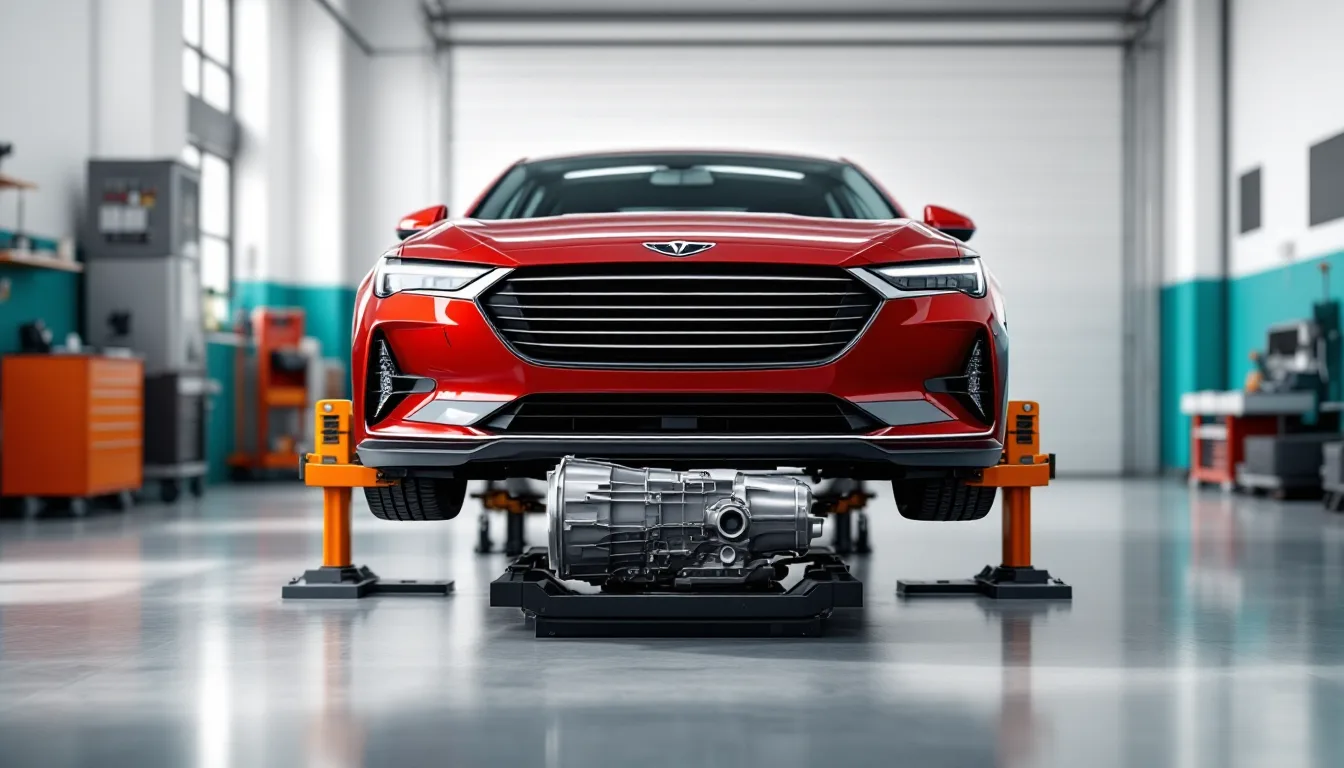
What does a slipping transmission cost to fix in Dallas, and what does the price include?
A slipping transmission in Dallas can cost anywhere from a $189–$349 fluid and filter service to a $2,800–$4,500 remanufactured unit, and the only honest way to know which end you are at is a diagnosis that reads the fluid, the codes, the line pressure and the adaptation values before anyone orders a part. At an independent all-makes shop that diagnosis is $99–$189, and it ends in a written range for the repair the evidence supports. Between the two extremes sit the repairs that fix most slipping complaints we see: a solenoid pack or valve body at $600–$1,800, or a CVT fluid service at $189–$299 on a Nissan or Honda that is simply overdue. No part is ordered until you have approved the range. If your car flares between gears or the engine revs without the speed following, email service@dallasmechanic.net with the year, model, mileage and when it happens; we will say whether it is safe to drive in for a same-day look.
What does transmission slipping actually feel like?
Drivers describe slipping in four ways, and each one points the technician somewhere slightly different.
The first is a flare between gears. You accelerate, the transmission starts a shift, and the engine speed jumps a few hundred RPM before the next gear catches. On a tachometer it looks like a spike; from the seat it feels like the car briefly lost its grip on the road. A flare on one particular shift, say second to third, usually means a clutch or band for that gear is not applying with full pressure.
The second is RPM climbing without the speed following. You press the pedal, the engine note rises, and the car gains speed slowly or not at all. On a conventional automatic that is clutch material failing to hold under load. On a CVT it is the belt or chain slipping on the pulleys, and that is the one symptom on a CVT that should stop you driving it, because every mile of belt slip scores the pulley faces.
The third is delayed engagement. You shift from Park into Drive or Reverse and nothing happens for a second or two, then the car lurches into gear. Cold-morning delay that clears after a minute is almost always fluid level or a tired pump seal. Delay that is there hot and cold is a pressure problem inside the valve body or a worn forward clutch.
The fourth is shudder, a vibration at steady throttle between roughly 25 and 45 mph that feels like driving over a rumble strip. That is nearly always the torque converter clutch, and on some GM and Ford units it is a fluid-related complaint rather than a mechanical one, which matters a great deal for the price.
Two things are worth noting before the causes. A hard shift, a bang into gear, is a different complaint from a slip and usually signals that the transmission has entered a protective mode because it detected slip and is now applying everything at maximum pressure. And a transmission warning on the dash almost always means the check engine light is on as well, which has an emissions consequence in Dallas County covered below.
What causes a transmission to slip, from cheapest to most expensive?
Low, burnt or wrong fluid
Automatic transmission fluid does three jobs: it is the hydraulic medium that applies the clutches, it is the coolant, and it carries the friction modifiers that let clutch plates grip and release smoothly. Lose any of the three and you get slip. A quart low from a seeping pan gasket or a cooler line is enough to uncover the pump pickup on a hard corner and cause a momentary flare. Fluid that has overheated in Dallas stop-and-go traffic darkens and loses its friction modifiers, and clutches that were fine on fresh fluid start to slip on burnt fluid.
Wrong fluid is more common than people expect, because the days of one universal ATF ended two decades ago. A CVT filled with conventional ATF will slip within days. A Honda automatic filled with a multi-vehicle fluid often develops a shudder. Ford and GM each specify particular fluids for the units listed below, and Hyundai and Kia dual-clutch units take a gear oil, not ATF at all. The owner portals for Nissan, Honda and Ford list the fluid specification by VIN, and the first thing a diagnosis establishes is whether what is in the pan matches it.
Solenoids and the valve body
The valve body is the hydraulic control center bolted to the bottom or side of the transmission, and the solenoids are the electrically driven valves on it that the transmission computer uses to route pressure to each clutch. A solenoid that sticks, or a coil that drifts out of its resistance range, causes a flare on one shift, a delayed engagement, or a specific code. The valve body itself wears where the spool valves run in the aluminum bores, and worn bores leak pressure, which shows up as slip on hot days under load before it shows up anywhere else.
This is the middle of the price range and the repair we write most often after a diagnosis: a solenoid pack or valve body runs $600–$1,800 and takes three to eight hours depending on whether the pan comes off in the car or the unit has to be partially removed. On many transmissions a remanufactured valve body with updated solenoids rescues a car that a less careful shop would have condemned.
Torque converter
The torque converter is the fluid coupling between the engine and the transmission, and inside it is a lock-up clutch that engages at cruise to eliminate slip and save fuel. When that clutch wears or its friction material glazes, you get shudder at steady throttle. When the converter's internal bearings or the stator fail, you get a whine and heat. Converter replacement requires the transmission to come out, so it is rarely done alone; by the time the converter is bad, the debris it sheds has usually circulated through the valve body and the cooler. The written range for a converter job therefore depends on what the fluid and the pan tell us about the rest of the unit, and it is one of the cases where a remanufactured transmission can be the cheaper path.
Clutch packs and hard parts
Clutch plates worn down to the steel, a cracked drum, a broken snap ring or a planetary gearset with damaged teeth are the expensive end. All of them require full disassembly. On a conventional automatic that opens the rebuild-or-replace decision below. On a CVT the equivalent is belt or chain wear and scored pulleys, and CVTs are generally not rebuilt at the shop level because the belt and pulleys are a matched set, so a worn CVT typically moves straight to a remanufactured unit at $2,800–$4,500.
Which transmissions slip in predictable ways on the cars Dallas drives?
Nissan and Honda CVTs
Nissan has used Jatco continuously variable transmissions across the Altima, Sentra, Rogue, Versa and Murano, and Honda has used its own CVT in the Civic, Accord, HR-V, CR-V and Fit. The complaints differ. Nissan CVTs that have run on old fluid or been overheated tend to judder from a stop, whine, and eventually slip under load, and the transmission computer stores a fluid temperature history that tells us how hard a life it has had. Honda CVTs are generally more durable but sensitive to fluid; a judder on light throttle that appears somewhere between 60,000 and 90,000 miles often responds to a service with Honda's own fluid, sometimes done twice. Our Nissan and Honda pages explain which models we see most, and the plain rule is that a CVT fluid service at $189–$299 on the manufacturer's fluid, done on time, is the single cheapest thing that keeps these cars out of the replacement column.
Ford 6F35 and 10R80
The 6F35 is the six-speed behind Ford's four-cylinder engines in the Escape, Fusion and Transit Connect, and its common slip complaints are a flare on the upper shifts and a delayed reverse engagement, both of which trace back to the valve body and solenoids more often than to the clutches. The 10R80 ten-speed in the F-150, Mustang, Expedition and Ranger is a more complex unit; the typical complaints are harsh or delayed shifts and a slip or clunk in the lower gears. Ford has released calibration updates for the 10R80, so the diagnosis on one of those starts with checking the software level before any hardware is blamed. Fluid and filter service on either unit is $189–$349, and a valve body on either falls within the $600–$1,800 line. See the Ford page for the models we service.
GM 6T40 and 8L90 shudder
The 6T40 family in the Chevrolet Malibu, Cruze and Equinox and the Buick Verano is known for a wave plate failure in earlier years that takes out third, fifth and reverse together, and for solenoid and valve body wear later in life. The 8L90 and 8L45 eight-speed in the Silverado, Tahoe, Camaro and Colorado has a widely reported torque converter shudder between about 25 and 45 mph. GM addressed it with a service bulletin calling for the fluid to be exchanged for a revised formulation rather than a mechanical repair. A shudder on one of those trucks should therefore start with a fluid exchange at $189–$349 and a road test, not a converter quote; if the shudder persists after the revised fluid has run a few hundred miles, the converter conversation stands on firm ground. Our Chevrolet page lists the trucks and SUVs we see.
Hyundai and Kia dual-clutch
The seven-speed dry dual-clutch transmission that Hyundai and Kia used in the Veloster, Elantra GT, Sonata Eco, Tucson, Soul and Forte in certain years behaves like two automated manuals sharing a case. The slip-like complaints are a shudder from a stop, a hesitation when pulling into traffic, and a delayed take-off that owners describe as the car not knowing which gear it wants. These units do not slip in the hydraulic sense; the dry clutches wear, and the clutch actuator adapts until it runs out of adjustment. The fix sequence is a clutch adaptation reset first, then an actuator, then the clutch assembly. Our Hyundai and Kia pages cover both.
Volkswagen DSG mechatronic
Volkswagen's DSG, the six-speed wet-clutch unit in the GTI, Jetta and Passat and the seven-speed dry-clutch unit in some Jettas, is controlled by a mechatronic unit, a combined valve body and computer living inside the transmission. Mechatronic faults produce a flashing gear indicator, the loss of one set of gears, or a lurch from a stop. On the wet-clutch units the fluid and filter are a 40,000-mile service in the manufacturer's schedule, and skipping it is the usual road to clutch slip. A DSG fluid and filter service sits in the $189–$349 line, and a mechatronic unit is quoted on the valve body line at $600–$1,800 with coding to the car. The Volkswagen page has more.
Can a fluid and filter service fix slipping, or does it just hide it?
Both, which is why the diagnosis comes first. Fresh fluid with the right friction modifiers restores clutch grip that was lost to burnt fluid, and it is the correct repair when the fluid was the problem. A converter shudder on an 8L90, a Honda CVT judder, a Nissan CVT that was simply overdue, a 6F35 that is a quart low from a leaking cooler line: all of these are fixed by a service, and the invoice is $189–$349 for a conventional automatic or $189–$299 for a CVT.
The same service masks a mechanical problem for a while. If the clutches are already worn, fresh fluid grips better for a few thousand miles and then the slip returns, worse. If the pan is full of friction material and metal, a service is money spent on a transmission that needs to come apart. That is why the pan comes off and the fluid is inspected before we recommend a service, and why we will say plainly if what we find means a service would be throwing money at the problem.
A note on the word flush. A machine flush that pushes new fluid through a transmission with a worn pump and a clogged filter can dislodge debris into the valve body. On most units we do a drain, filter and fill, sometimes repeated, rather than a pressure flush, and the manufacturer's procedure decides. The nonprofit Car Care Council counts transmission fluid among the items owners most often neglect, and the owner's manual interval, not the lifetime-fluid claim, is what we follow.
How do you decide between repair, rebuild and a remanufactured transmission?
The decision has three inputs: what failed, what else is worn, and what the car is worth to you.
Repair means fixing the one thing that failed while the rest of the unit stays in the car: a solenoid, a valve body, a cooler line, a pan gasket, a wiring connector. It is the right choice when the diagnosis isolates a single cause and the fluid shows the clutches are healthy. Most of the slipping cars we see leave on a repair.
Rebuild means removing the transmission, disassembling it, replacing the clutches, seals, bushings and whatever hard parts failed, and reassembling it with the original case and gearsets. The Automatic Transmission Rebuilders Association, ATRA, publishes rebuild standards and runs a nationwide warranty program for its member shops, and a proper rebuild follows those standards. A rebuild makes sense when the hard parts are mostly fine and the failure is clutch material or a single broken component, and the quote is written only after teardown, because nobody knows what a transmission needs until it is on the bench.
A remanufactured unit is a transmission rebuilt at a factory to a fixed specification, with every wear item and every known weak part updated, tested on a dynamometer, and shipped as an exchange. The published range is $2,800–$4,500 installed, and the job takes two to four days including the unit's transit time. It is the better choice when the hard parts are damaged, when the unit is a CVT, when the car needs to be back on the road quickly, or when the original design had a weakness that the remanufacturer corrects.
The car-value input matters more than people admit. The Bureau of Transportation Statistics reports that the average age of vehicles on American roads has passed 12 years, so many of the cars arriving with a slipping transmission are at a stage where a remanufactured unit costs less than a year of payments on a replacement. The Consumer Financial Protection Bureau's auto loan guidance is a useful frame for that comparison. We will say honestly if a car has other problems that make the transmission a poor investment, and we offer a written pre-purchase inspection for $129–$229 if you are weighing a replacement vehicle instead.
What does a transmission diagnosis include?
A transmission diagnosis at the shop is $99–$189 and usually takes 60 to 90 minutes. It includes four things, in order.
Fluid condition. The level is checked by the manufacturer's procedure, which on most modern units means at a specific fluid temperature with the engine running, and on many requires a scan tool to read that temperature. The fluid is inspected for color, smell and debris, and on units with a serviceable pan, the pan is dropped to look at the magnet and the filter.
Codes and data. The transmission control module and the engine module are scanned with factory-level software, not a generic reader. Transmission codes carry freeze-frame data: fluid temperature, gear commanded, gear ratio measured, solenoid duty and line pressure at the moment of the fault. The gear ratio error codes, P0730 through P0736, and the shift solenoid performance codes around P0750 through P0770, point to a specific clutch or solenoid, and the data tells us whether it was slipping hot, cold or under load.
Line pressure. On units with a pressure tap, a gauge is connected and pressure is read at idle, at stall and through the gears. Low pressure across the board is a pump or a regulator valve; low pressure in one gear is a leak in that circuit. On units without a tap, the module's commanded and measured pressure values do the same job.
Adaptation values. Modern transmissions learn. The module adjusts clutch fill times and pressures as clutches wear, and those learned values are readable. A clutch that the module has adapted to the limit of its range is a worn clutch, even if it has not slipped yet. Resetting those values after a repair is part of the job, and on many units a relearn drive is required before the shift quality is right.
The result is a written finding and a range. Because a transmission fault stores a code that commands the check engine light on, and the OBD emissions test in Dallas County and the surrounding emissions counties checks for a commanded-on light on gasoline vehicles 2 through 24 years old, the repair also clears the way for a passing inspection; the Texas Department of Public Safety explains that the annual safety inspection ended on January 1, 2025, while the emissions test continues in those counties. After the repair an emissions readiness check at $49–$99 confirms the monitors have set before you go to the station.
What moves the price, and how does the written range work?
| Line item | Typical Dallas independent range | Time | What moves the price |
|---|---|---|---|
| Transmission diagnosis (factory-level scan, fluid, pressure, adaptations) | $99–$189 | 1–1.5 hours | Intermittent faults that need a logged road test |
| Extended electrical diagnosis (wiring, connectors, oscilloscope) | $189–$379 | 2–4 hours | Harness damage, water intrusion in connectors |
| Automatic transmission fluid and filter service | $189–$349 | 1.5–2 hours | Fluid specification and capacity, filter access, pan gasket type |
| CVT fluid service (manufacturer fluid) | $189–$299 | 1–1.5 hours | Fluid capacity, whether a second service is needed |
| Solenoid pack or valve body | $600–$1,800 | 3–8 hours | In-car access or partial removal, coding, fluid refill |
| Remanufactured transmission replacement | $2,800–$4,500 | 2–4 days | Unit type, CVT or conventional, four-wheel drive, cooler flush and core |
| Emissions readiness check after repair | $49–$99 | under 1 hour | Monitors that need a specific drive cycle |
The ranges are ranges because the same repair is not the same job on every car. Five things move the figure within each line.
Access. A valve body that comes out with the pan in the car takes three hours; one that requires the subframe to drop or the transmission to come partly out takes eight. A fluid service on a unit with a drain plug and a spin-on filter is at the bottom of its line; one with a sealed pan and a fill procedure that needs the scan tool is at the top.
Fluid. Manufacturer-specific fluids cost more than universal ones, and a ten-speed takes more of it than a four-speed.
Drive type. All-wheel-drive and four-wheel-drive vehicles add a transfer case and driveshafts to any removal job.
What the fluid revealed. A remanufactured unit installed into a car with a contaminated cooler is a comeback waiting to happen, so a cooler flush or a replacement cooler is part of the job when the old fluid was full of debris.
Labor. The Bureau of Labor Statistics puts the median wage for automotive technicians at about $23.88 an hour as of 2024, and transmission work sits at the skilled end of that trade, so the hours in the table are the main driver of the figure.
The written range works like this. After the diagnosis you receive a document that lists the repair, the parts, the labor hours and the range, with what would push it toward the top. You approve it before any part is ordered. If something changes during the job, say a cooler line that is corroded and will not seal, we stop and call. The final invoice falls inside the approved range unless you approved a change, and the repair carries the 2-year/24,000-mile warranty, in full 2 years parts and 2 years labor, up to 24,000 miles, nationwide. Dealer pricing for identical work is commonly higher, and the diagnosis fee is the same whether the answer turns out to be a fluid service or a remanufactured unit.
Does an independent transmission repair affect the factory warranty?
If the car is still under the manufacturer's powertrain warranty, a transmission that slips should go to the dealer first, because the repair may be covered at no cost. Our diagnosis can confirm the fault and document it before you go. For maintenance such as fluid service during the warranty period, the Federal Trade Commission's consumer page on auto warranties spells out that a dealer cannot "deny your warranty coverage simply because you had" the service done at an independent shop, a protection that comes from the Magnuson-Moss Warranty Act. The condition is that the correct fluid and procedure were used, which is why the invoice records the fluid specification and the quantity.
Before any transmission work, look the VIN up in the NHTSA recall database. Several of the units above have been the subject of recalls or manufacturer coverage extensions over the years, and a problem covered by an open recall is repaired at no cost regardless of mileage. We check this as part of the diagnosis, and we will tell you if a dealer visit will cost you less than we would.
The transmission service page lists everything above with the current ranges. If the car is already in limp mode or the RPM is climbing without the speed, have it brought in rather than driven, and email service@dallasmechanic.net so we can schedule the diagnosis for the first day the schedule allows. If you are coming from Rowlett, Garland or Balch Springs, the shop is a short tow away.
Where do these figures come from?
- FTC consumer guidance, auto warranties and who may do the maintenance: the Magnuson-Moss explanation and the quoted phrase about outside service.
- BLS wage data for automotive technicians: median hourly wage for the trade in 2024.
- BTS vehicle age data: average vehicle age past 12 years.
- Texas DPS vehicle inspection page: the safety inspection ending on January 1, 2025, and the emissions test that continues with its vehicle age bracket.
- NHTSA recall database: open recall check by VIN before any repair.
- ATRA, Automatic Transmission Rebuilders Association: rebuild standards and the member warranty program.
- Car Care Council: fluid maintenance guidance for owners.
- Consumer Financial Protection Bureau, Auto Loans: framing the repair-versus-replace-the-car comparison.
- Owner portals for Nissan, Honda and Ford: fluid specifications and service intervals by VIN.