A/C
A/C Repair Cost in Dallas: Recharge vs Compressor
· 16 min read · Dallas Mechanic
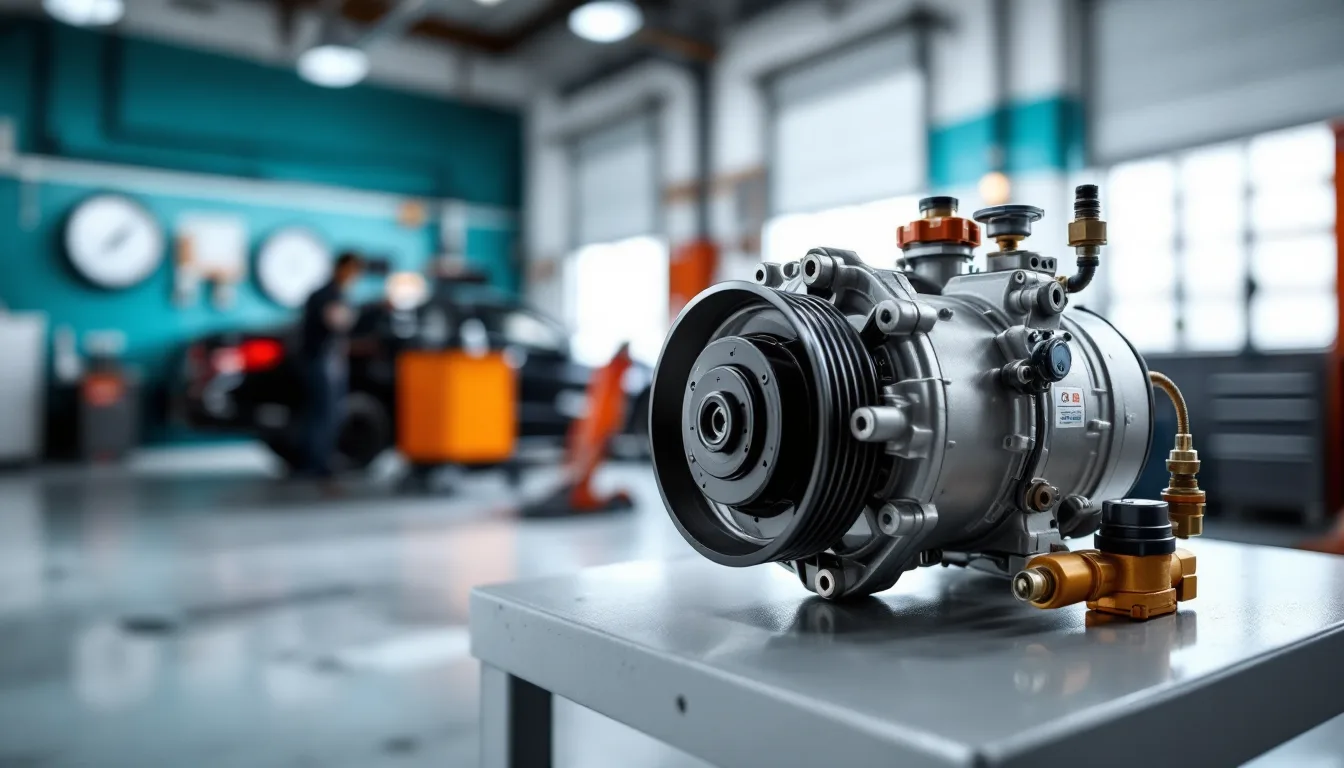
What does car A/C repair cost in Dallas and what do you actually get?
Car A/C repair in Dallas starts with a performance check with UV dye and a leak test at $99–$149, which takes about an hour and tells you what is wrong before anything is sold. From there, an evacuate and recharge runs $149–$249 with R-134a or $249–$399 with R-1234yf, a condenser replacement runs $450–$900, a blower motor or resistor $220–$450, and a complete compressor replacement with the receiver/drier, expansion valve or orifice tube and a flush runs $800–$1,600 at an independent shop. The price you end up paying depends far more on where the refrigerant is escaping than on the make of the car, which is why the check comes first and the written range comes before any part is ordered. If the vents are blowing warm, email service@dallasmechanic.net and include the year, model, mileage and whether it fails at idle, at speed or all the time.
Why is "it just needs a recharge" usually the wrong diagnosis?
A car air conditioning system is a sealed loop. Refrigerant circulates from the compressor through the condenser, the drier, the expansion valve or orifice tube, the evaporator and back again, and in a healthy system the same charge stays inside for the life of the car. Refrigerant is not consumed like fuel or washer fluid. When a system is low, it is low because something has let the gas out, and that something is still there after a parts-store can has topped it up.
That is the core problem with the recharge-only approach that is so common in Dallas every June. The can brings the pressure back up, the compressor clutch engages again and the air gets cold, so the job feels finished. A week or a month later the charge has escaped through the same leak, and the car is back where it started, except the owner has paid once for refrigerant that is now in the atmosphere and will pay again for the real repair. On an R-1234yf car that wasted charge is not cheap.
There is also a mechanical cost to running low. The compressor is lubricated by oil carried in the refrigerant stream. A system that is half empty circulates less oil, the compressor runs hotter and wears faster, and a leak that would have cost a few hundred dollars to fix can turn into a compressor replacement. The federal rules reflect the environmental side of this: the EPA's motor vehicle air conditioning program prohibits knowingly venting refrigerant during service and requires technicians who service these systems for compensation to hold Clean Air Act Section 609 certification. A shop that recovers, weighs and recharges to the exact specification is following those rules; one that simply adds gas to a leaking system is not doing the car any favors.
What does the A/C performance check with UV dye include?
The $99–$149 performance check is where the diagnosis actually happens, and it is the one line on the invoice that pays for itself. The technician starts by measuring vent temperature with the engine at idle and at a fast idle, with the cabin fan on high and recirculation on, and records ambient temperature and humidity at the same time, because a 48 F vent on a 100 F afternoon is a very different result from a 48 F vent on a mild morning. Manifold gauges or a refrigerant machine then read the high-side and low-side pressures, and those two numbers compared against ambient temperature say a great deal about what is happening inside the loop.
Low pressure on both sides with a compressor that cycles rapidly points at a low charge. A high-side pressure that climbs far above the expected value for the outside temperature points at a condenser that cannot shed heat, a fan that is not running or air trapped in the system. A low-side reading that drops into vacuum suggests a restriction at the orifice tube or expansion valve. The compressor clutch is watched for engagement and slipping, the condenser face is inspected for debris and bent fins, the cabin filter is checked, and the blower is measured at every speed.
If the charge is low, the technician recovers whatever remains, weighs it against the specification on the underhood label, adds a UV dye charge with the correct oil, recharges to the exact weight and runs the system. Dye shows up under an ultraviolet lamp at the leak point, often immediately at a fitting or a service port, sometimes only after a few days of driving. An electronic leak detector covers the places the lamp cannot reach, like the evaporator core buried in the dash, which is checked through the drain tube or the vent. The result is a written finding with a range for the repair, approved before anything is ordered.
How much does an evacuate and recharge cost, and why is R-1234yf pricier?
Once the leak is found and fixed, or when the check shows a system that is simply slightly low after many years with no detectable leak, the evacuate and recharge is the service that restores performance. The machine pulls the system into a deep vacuum for a set period, which boils off moisture that would otherwise form acid and ice inside the loop, then the vacuum is held and watched for decay as a final leak check before the measured charge and oil go back in. On a Dallas independent-shop invoice that runs $149–$249 for R-134a and $249–$399 for R-1234yf, and the machine time is roughly 60 to 90 minutes.
The reason for the two prices is the refrigerant itself. R-134a was the standard automotive refrigerant from the mid-1990s and has a global warming potential of roughly 1,430 times that of carbon dioxide. R-1234yf, its replacement, has a global warming potential below 1 on the same scale. Under the EPA's Significant New Alternatives Policy, described on the same MVAC page, R-134a was listed as unacceptable for newly manufactured light-duty vehicles from model year 2021, and automakers began the switch years earlier, with the first U.S. models arriving around 2013 and most of the fleet converted by 2017 to 2019. If your car is a 2015 or newer, check the underhood label; it very likely says R-1234yf.
The new gas costs several times more per pound, it is produced by a small number of licensed suppliers, and because it is classified as mildly flammable it requires its own dedicated recovery and recharge machine with different fittings and safety features. Shops cannot run it through an R-134a machine. The Mobile Air Climate Systems Association, which runs the most widely used Section 609 certification program, covers the handling differences in its training. All of that equipment and refrigerant cost lands on the recharge line, which is why the newer cars sit $100–$150 higher for the same procedure. Retrofit kits that put the older gas into a 1234yf system are a bad idea: the fittings are deliberately different, and mixing refrigerants contaminates the shop's recovery equipment, which is one reason the system is sampled with a refrigerant identifier before the machine is connected.
Where does the refrigerant usually leak out?
Every car has its own weak points, but after enough Dallas summers the same handful of leak sources account for most of the work. Knowing them helps you understand why one estimate says $450 and another says $1,400.
Condenser damage from road debris
The condenser sits in front of the radiator, behind the grille, and takes every piece of gravel the car ahead throws up on LBJ Freeway. A stone can pierce a tube outright or crack a fin joint that only begins weeping after the next thermal cycle. Corrosion at the bottom of the condenser, where road grime and moisture collect, is the other common failure. A condenser replacement runs $450–$900 and takes two to three hours, with the top of the range on cars where the condenser is combined with a transmission cooler or where the bumper cover and the radiator support have to come apart to reach it.
Schrader valves and service ports
The service ports have spring-loaded valve cores like a tire valve, and the cores and their caps are the cheapest leak on the list. Dye shows up under the cap, a new core goes in with a dedicated tool without opening the system, and the car leaves with a recharge. It is also the reason the cap matters: the cap is the primary seal, and a missing cap turns a slow core leak into an empty system.
The evaporator core
The evaporator lives inside the dash, where the cabin air passes over it. Leaks here come from corrosion driven by moisture and debris that sit in the housing, and the symptom is a slow loss over months with dye found in the drain tube and a faintly oily film on the inside of the windshield. The part is not expensive, but on many cars the dash has to come out to reach it, which is why evaporator jobs are quoted individually after the performance check rather than from a table.
Hose crimps, O-rings and line fittings
Rubber sections of the refrigerant lines are crimped to aluminum ends, and both the crimp and the O-rings at every fitting dry out with age and heat. Dye at a fitting usually means a new O-ring and a recharge. Dye along a hose crimp means a new line assembly, with the price set by how many other components have to move to route it.
The compressor shaft seal and body seals
The compressor's front shaft seal is the one leak that points toward the expensive repair. Dye around the clutch and pulley means the seal is passing refrigerant and oil, and on most modern compressors the seal is not a separately serviceable part. Body seals between the compressor halves do the same thing. Either way, a leaking compressor is a compressor replacement, and that leads to the next question.
When does a compressor replacement make sense and what is included?
A compressor is replaced when it leaks, when it is noisy, when the clutch has failed on a design where the clutch is not sold separately, or when it has stopped pumping, which shows up as low-side and high-side pressures that equalize with the compressor engaged. In Dallas an independent-shop compressor replacement runs $800–$1,600 and takes three to five hours. That is a wide range, and the parts list is what explains it.
A compressor that fails internally sheds aluminum, Teflon and bearing material into the refrigerant and oil. Some of that debris lodges in the condenser's narrow parallel-flow tubes, some in the receiver/drier or accumulator, and some at the expansion valve or orifice tube, which are the first restrictions downstream. The industry name for the worst version of this, where the oil turns into a black sludge that coats every surface in the system, is black death, and it is not a phrase anyone in the trade uses lightly. Put a new compressor into a system still carrying that debris and the new unit ingests it on the first drive, which is why the most common story behind a second compressor failure is a first replacement done without cleaning the system.
A proper compressor job therefore includes the receiver/drier or accumulator, because its desiccant is saturated with moisture the moment the system is opened and its filter is where the debris collected; the expansion valve or orifice tube, because it is a fine screen that cannot be cleaned reliably; a solvent flush of the lines and evaporator; and, after a severe internal failure, a new condenser, since modern parallel-flow condensers cannot be flushed clean and the price of trying is a second compressor. The correct amount and type of oil is measured into the new components, the system is evacuated for an extended period and recharged by weight, and pressures and vent temperatures are documented on the invoice. The parts suppliers back this up: most compressor manufacturers require the drier, valve and flush, with proof, before they will cover the compressor itself, and the shop's own repair guarantee of 2 years parts and 2 years labor, up to 24,000 miles, nationwide depends on doing it the same way.
Which electrical problems feel like weak A/C but are not refrigerant at all?
A surprising share of warm-air complaints in Dallas never involve the refrigerant loop. The battery and electrical side of the system has a handful of parts that produce the same symptom at a fraction of the price, and ruling them in or out is part of why the performance check measures electrical signals and not just pressures.
The blend door actuator is the usual suspect when one side of the car is cold and the other is warm, or when the air is cool but never cold. The actuator is a small motor that positions a door inside the HVAC case between the heater core and the evaporator, and when its plastic gears strip the door stops where it is, often part way into the heat. A clicking from behind the dash when the temperature knob moves is the giveaway. The refrigerant side can be perfect and the vents will still blow warm.
The blower motor and its resistor or control module determine how much of that cold air reaches you. A blower that only works on high points at the resistor; a blower that is slow on every speed, noisy or intermittent points at the motor itself. Either replacement runs $220–$450, and because a weak blower lets the evaporator ice over on humid days, fixing it can also cure the symptom where the air starts cold and fades to nothing after twenty minutes. A clogged cabin air filter does the same thing for far less and is checked first.
On the compressor side, the clutch relay, the high- and low-pressure switches or the transducer, and the clutch coil itself all interrupt the compressor without any loss of refrigerant. A pressure switch that reads low when the system is full keeps the compressor off; a relay with burned contacts drops out when hot and comes back when the car cools; a clutch coil with high resistance from heat engages when cold and slips once the engine bay warms up. A scan tool that reads the climate control module's commanded and actual values, together with a meter at the clutch connector, separates these in minutes. Many of these cars also use the engine computer to deny the compressor when the engine is overheating or the cooling fan is faulted, so an A/C complaint sometimes turns into a cooling system finding, which is a better outcome than the owner expected.
How does Dallas heat change what the A/C system has to do?
The system that keeps a cabin comfortable in Portland is working at a fraction of its capacity. The same system in Dallas is working at its limit for four months a year. Climate records kept by the Fort Worth forecast office of the National Weather Service show roughly 20 days at or above 100 F in an average year, with the hottest summers running well past that, and overnight lows that often stay in the upper 70s, so the system never gets an easy start.
Heat rejection is the first casualty. The condenser can only dump heat into air that is cooler than the refrigerant, and when the air entering the grille is already 105 F off the pavement at a red light, high-side pressure climbs, the compressor works harder, and any weakness in the fan, the fan clutch or the condenser face shows up as cold air at speed and warm air in traffic. A condenser with a quarter of its fins packed with cottonwood fluff and road grime still works in April and fails in July.
Cabin soak is the second. A car parked at a Garland or Mesquite office lot in August can see interior surfaces far above the outside temperature, and the dash, seats and glass keep radiating that heat into the air for the first fifteen minutes of driving. That is normal, but it is also why a marginal system that would pass in a mild climate produces complaints here, and why the performance check compares vent temperature to the expected value for the day's ambient reading rather than to a fixed number.
Heat also ages the parts. Rubber hose sections, O-rings and the shaft seal harden faster, compressor oil breaks down sooner and the plastic gears in blend door actuators grow brittle. Combine that with the age of the average car on the road, which the Bureau of Transportation Statistics puts at over 12 years, and the typical A/C customer in east Dallas is driving a car whose seals have been through a dozen Texas summers. On a Toyota or Honda from the early 2010s, the usual list is a condenser, a service port core and a blend door actuator; on a domestic truck the compressor clutch and the blend door are the common calls.
What moves the A/C repair price up or down?
The table below shows the independent-shop ranges for the work on the A/C repair page and the factors that put a given car at the low or the high end. Expect dealer quotes to land higher for comparable work. The labor side tracks technician pay, a 2024 median the Bureau of Labor Statistics reports as roughly $23.88 an hour, and shop rates that cover the recovery machines, identifiers and leak detection equipment the work needs.
| A/C service | Dallas independent-shop range | Time | What moves the price |
|---|---|---|---|
| Performance check with UV dye and leak test | $99–$149 | about 1 hour | Whether the system needs a dye charge added, and whether the evaporator has to be checked through the dash |
| Evacuate and recharge, R-134a | $149–$249 | 1–1.5 hours | System capacity in ounces, oil added, whether a dye charge is included |
| Evacuate and recharge, R-1234yf | $249–$399 | 1–1.5 hours | Refrigerant price per pound, system capacity, dedicated machine time |
| Blower motor or resistor | $220–$450 | 1–2 hours | Resistor versus motor, access under the dash, variable-speed control modules at the top |
| Condenser replacement | $450–$900 | 2–3 hours | Combined condenser and transmission cooler, bumper and radiator support removal, refrigerant type |
| Compressor replacement with drier, expansion valve or orifice tube and flush | $800–$1,600 | 3–5 hours | Compressor access, black death requiring a condenser, R-1234yf recharge, clutch-only option where available |
Two factors cut across every line. Cars with rear A/C carry a second evaporator, a second expansion valve and a longer line set, which raises both the refrigerant charge and the number of leak points. Hybrids use an electric compressor with high-voltage insulating oil, and contaminating it with ordinary PAG oil can destroy the compressor, so those jobs demand the right oil and a technician comfortable with the high-voltage system.
The Car Care Council's maintenance guidance recommends having the A/C system checked ahead of the hot season rather than after it fails, and in Dallas that is practical advice: a performance check in April finds a slow leak when the repair is a $450 condenser, not a July breakdown with an empty system, a seized compressor and a two-day wait for parts.
Will an independent A/C repair affect my new-car warranty?
If your car is still inside its factory warranty and the A/C has failed, the compressor or evaporator may well be covered, and the shop will tell you so and send you to the dealer rather than charge you for a repair someone else should pay for. For maintenance-type A/C work on a car under warranty, the law is on your side. The Federal Trade Commission's page on auto warranties spells out that, thanks to the Magnuson-Moss Warranty Act, neither the automaker nor a dealer may "claim that your warranty is void" merely because you chose an independent shop for the A/C service. Keep the invoice that shows the refrigerant type, the weight recovered and recharged, the oil added and the dye results, and it will stand up if a later warranty question comes up.
When the A/C fails during a Dallas summer the temptation is to grab a can and hope, and sometimes that buys a week. The better sequence is a $99–$149 performance check that finds the leak, a written range for the specific repair that is approved before a part is ordered, and a recharge by weight with the correct refrigerant once the system is sealed again. If you are seeing warm air, a compressor that cycles or a vent that fades in traffic, email service@dallasmechanic.net and describe when it happens; a same-day appointment is often possible when the schedule allows, and the diagnosis comes before any sales pitch.
Where do these figures come from?
- EPA, Motor Vehicle Air Conditioning (MVAC) program: Section 609 certification, venting prohibition and refrigerant transitions
- Mobile Air Climate Systems Association: Section 609 training and refrigerant handling
- National Weather Service Fort Worth: Dallas-Fort Worth climate records
- BTS table on the average age of vehicles still in operation
- BLS handbook entry for automotive technicians, 2024 median pay
- Car Care Council: seasonal maintenance guidance
- FTC consumer page on warranties and independent maintenance