Battery and Electrical Repair
Tested first: battery, alternator, starter, draws
- Price range
- $179–$950
- Typical time
- 1–3 hours
$129–$450 · 1–2 hours
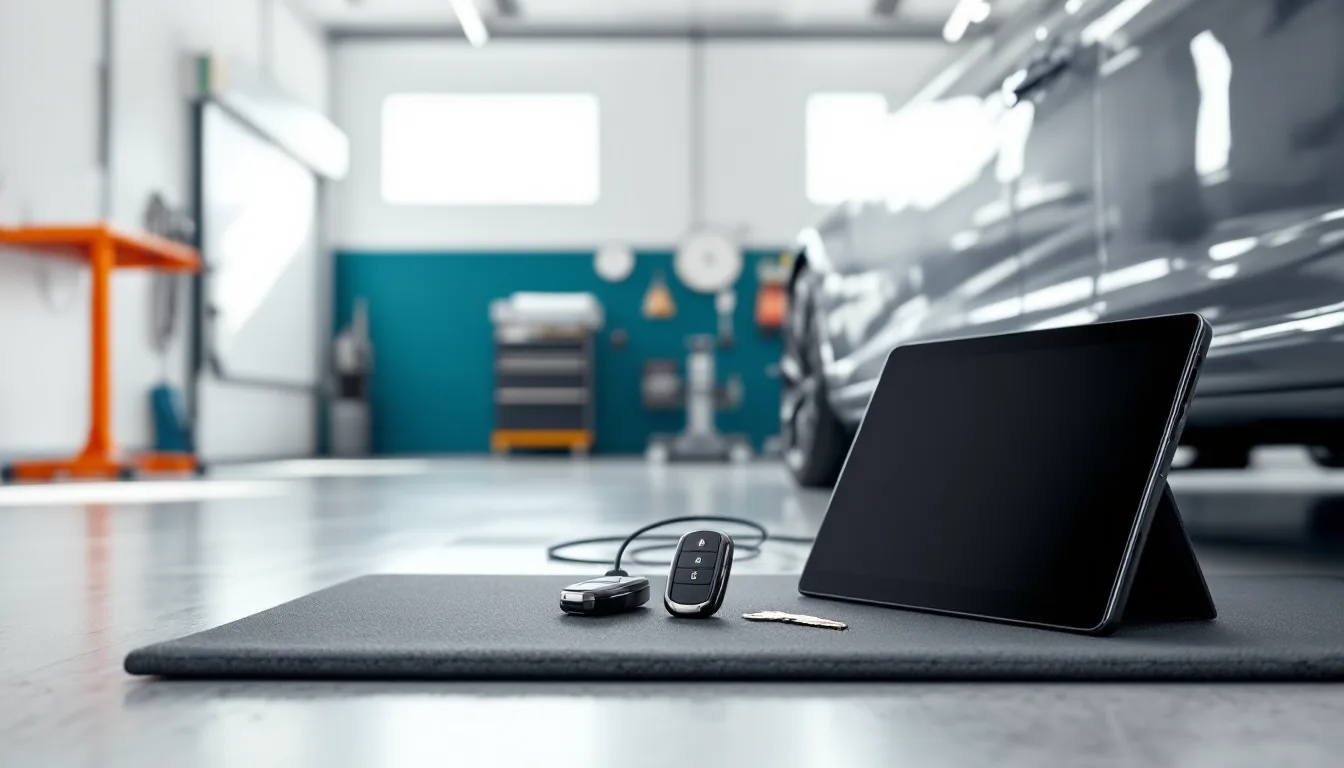
A second key before you lose the first is the cheapest key you will ever buy. Spare keys run $129–$250, a car with no key at all $250–$450, and a module that needs programming after replacement $149–$350.
All makes, published price ranges, every repair covered for 2-year/24,000-mile
Symptoms
Problem
Engine cranks, will not start, security light flashing
Likely cause
Key transponder not recognised, a failed antenna ring, or an immobilizer module fault
The fix
Key read and programmed; antenna or module replaced and coded if the key is fine
Problem
Key not detected on a push-button car
Likely cause
Fob battery flat, a failed fob, or a smart key module problem
The fix
Fob battery first; fob programmed or replaced; module read with the tool
Problem
All keys lost
Likely cause
Keys stolen, lost or left with a previous owner
The fix
Security data obtained for the car, new keys cut and programmed, old ones deleted
Problem
Remote locks but will not start the car
Likely cause
Remote programmed but the transponder is not, common after a cheap key online
The fix
Transponder programmed with the manufacturer software
Problem
Replaced module, car refuses it
Likely cause
Module needs programming to the VIN and, on many makes, immobilizer pairing
The fix
Programming and pairing through J2534 and the brand software
Problem
Immobilizer light after a dead battery
Likely cause
Low voltage during a jump corrupted the module's learned data
The fix
Battery and charging test, then the module relearn
Most of the cars on Dallas roads: Toyota and Lexus transponder and smart keys, Honda and Acura, Nissan and Infiniti, Ford and Lincoln, Chevrolet, GMC, Buick and Cadillac, Hyundai and Kia, Chrysler, Dodge, Jeep and Ram, Mazda and Subaru, and many Volkswagen and Audi models. The shop uses the manufacturer's own software where the make provides security access to independent shops, and professional key programming equipment for the makes that allow it, with ownership verified against the VIN before any key is cut.
Some newer models protect their security data so that only a dealer can order the key or unlock the programming, and some European cars need a dealer-ordered key matched to the car at the factory. When that applies, the shop says so when you book rather than after you have driven in, and tells you what the dealer route involves.
A key you bought online can usually be programmed if it is the correct part number and frequency and has not already been locked to another car. Cheap fobs that fail that test are the usual reason an online key cannot be made to work, and the shop will tell you before charging for the attempt.
A spare key cut and programmed runs $129–$250 depending on the type: a simple transponder key at the low end, a smart key with push-button start at the top, and the key itself is most of the price. Programming a spare takes about an hour when the car and an existing key are present, because the existing key lets the car accept a new one without touching the security data.
Once you have lost the last key, the job becomes all-keys-lost at $250–$450, because the shop has to obtain the security data for the car, access the immobilizer directly and in some cases wait for a code from the manufacturer. The difference between the two is the cheapest insurance in motoring, and it is why the shop recommends a second key at the first visit.
Remotes that only lock and unlock, and do not start the car, are programmed the same way and are usually quick.
The first step is proof of ownership: a registration or title in your name and photo identification, matched to the VIN. No key is made without it. Then the shop reads the car's immobilizer with the tool, obtains the security data where the manufacturer allows independent access, cuts the key to the lock code or by decoding the door lock, and programs the transponder and remote. Any previous keys are deleted from the car so a key that turns up in a pawn shop cannot start it.
On most Japanese, Korean and domestic cars this is done in the shop in 1–2 hours at $250–$450. On some newer models the manufacturer requires a dealer-ordered key or a dealer security session, and that is explained before you tow the car anywhere. A car that cannot be driven in can be towed to the shop and worked on there.
A new ignition lock is rarely needed; a lost key is a programming problem, not a lock problem, unless the lock itself is damaged.
Nearly every electronic module on a modern car, the engine computer, transmission controller, body control module, ABS unit, instrument cluster, radio and many others, has to be programmed to the car it is installed in. A replacement module arrives blank or with generic software; it needs the manufacturer's software loaded for that VIN and, on many makes, pairing with the immobilizer so the car will start. Without that, a replaced engine computer cranks and does not start, a new cluster shows the wrong mileage, and a new body module ignores the key.
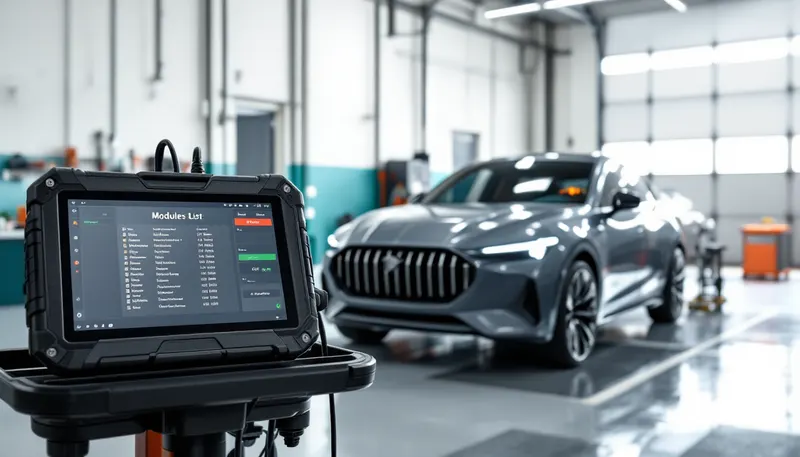
The shop programs modules through a J2534 pass-through interface and the manufacturer's own software, the same route the dealer uses, at $149–$350 depending on the module and the make. Software updates that fix drivability complaints, shift quality or false warnings are done the same way when the manufacturer publishes them.
Module programming is also what makes a used module workable on some makes and impossible on others; the estimate says which before a used part is bought.
When a battery goes flat and the car is jumped, the voltage swings during the jump can corrupt the learned data in a module or leave the immobilizer in a locked state. The symptom is a car that cranks and will not start with the security light on, often blamed on the key. The repair is a relearn or a reprogram once the battery and the charging system have been tested, because programming a module on a weak battery risks the same corruption.
That is why key and programming work starts with a voltage check and, if needed, a power supply on the car during the session. A battery replacement at $179–$399 is sometimes part of the fix, and the estimate separates the two.
Spare key cut and programmed $129–$250; all keys lost $250–$450; module programming $149–$350. The key type sets most of the figure: a basic transponder blade, a flip key, a proximity smart key. The make sets the rest, because some manufacturers charge for security access by the session and some require a code from the factory. Module programming moves with the module and whether immobilizer pairing is needed.
Programming is covered for 2 years parts and 2 years labor, up to 24,000 miles, nationwide like any repair; the key hardware carries the manufacturer's warranty. Most jobs are same-day with the car and ownership documents present.
Keys and fobs are original-equipment or from established key manufacturers (Strattec, Ilco and the brand's own parts); customer-supplied keys are programmed when the part number and frequency are correct and the key is not locked to another vehicle, with the attempt quoted first.
Modules are new original-equipment or, where the make permits, used units that can be reprogrammed; programming uses the manufacturer's software through a J2534 interface and ownership is verified for every key and immobilizer job.
What moves the price: key type (transponder, flip, smart), whether an existing key is available, manufacturer security access fees, and the module and pairing required.

Pricing
| Service | Price range | Typical time |
|---|---|---|
| Spare transponder key or smart key, cut and programmed | $129–$250 | about 1 hour |
| All keys lost: security data, new key, old keys deleted | $250–$450 | 1–2 hours |
| Module programming and immobilizer pairing through J2534 | $149–$350 | 1–2 hours |
| Battery replacement when low voltage caused the immobilizer fault | $179–$399 |
Dallas independent-shop ranges; the key type and the make's security access set the figure, confirmed when you book with the VIN and before any key is cut.
The offer
Risk reversal
Covered for 2 years parts and 2 years labor, up to 24,000 miles, nationwide
No deposit, no card online: you approve the written range before any part is ordered
Published range
$129–$450
1–2 hours
Brands
Toyota
Camry and Avalon, Corolla, RAV4 and Highlander
Honda
Civic, Accord, CR-V and HR-V
Nissan
Altima and Maxima, Sentra and Versa, Rogue and Murano
Ford
F-150, Super Duty F-250 and F-350, Explorer and Expedition
Chevrolet
Silverado and Sierra, Tahoe, Suburban and Yukon, Equinox, Terrain and Traverse
Hyundai
Elantra and Accent, Sonata, Tucson and Santa Fe
Questions
Cut and programmed, $129–$250, with the key itself most of the cost: a basic transponder key at the low end, a smart key for a push-button car at the top. Bring the car, an existing key and the registration, and it takes about an hour.
Usually not. For most Japanese, Korean and domestic makes the shop can make a key with the car present and your ownership documents, at $250–$450, and delete the lost one. For a few newer models the manufacturer locks the security data to dealers, and the shop tells you that when you call so you only tow once.
If it is the correct part number and frequency for the car and has not been locked to another vehicle, yes. Many cheap fobs fail that test, and the shop checks before charging for programming. A key from the shop carries a warranty; an online key does not.
Yes, through a J2534 interface and the manufacturer's software, at $149–$350 depending on the module and whether it needs pairing with the immobilizer. That covers engine and transmission computers, body modules, clusters and ABS units on most makes.
Sometimes the new battery is the wrong type or is in backwards; sometimes the fob lost its pairing; sometimes the fault is the car's antenna or smart key module. Most cars have a backup slot or spot where the fob can be held to start the engine, and the shop reads the module to find which it is.
A spare with an existing key present is about an hour. All-keys-lost is 1–2 hours when the manufacturer allows direct access, longer if a code has to be requested. Module programming is 1–2 hours. Most key jobs are done the same day you arrive.
Related
Tested first: battery, alternator, starter, draws
Factory-level scan, cause confirmed, written range
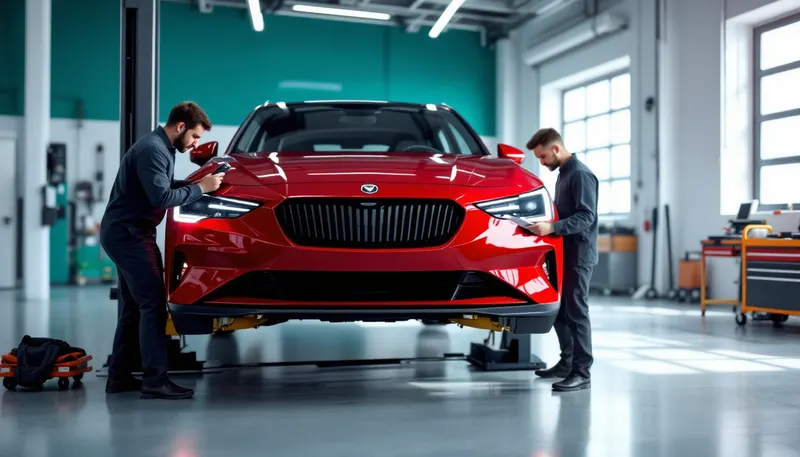
Scan, road test, lift, written report with photos
Book Keys and Programming in Dallas
Car key programming and module programming in Dallas for most makes: spare keys and fobs cut and programmed, all-keys-lost recovery, and control module programming through the manufacturer software and a J2534 interface.